What Is a NICU and When Does a Newborn Need NICU Care?
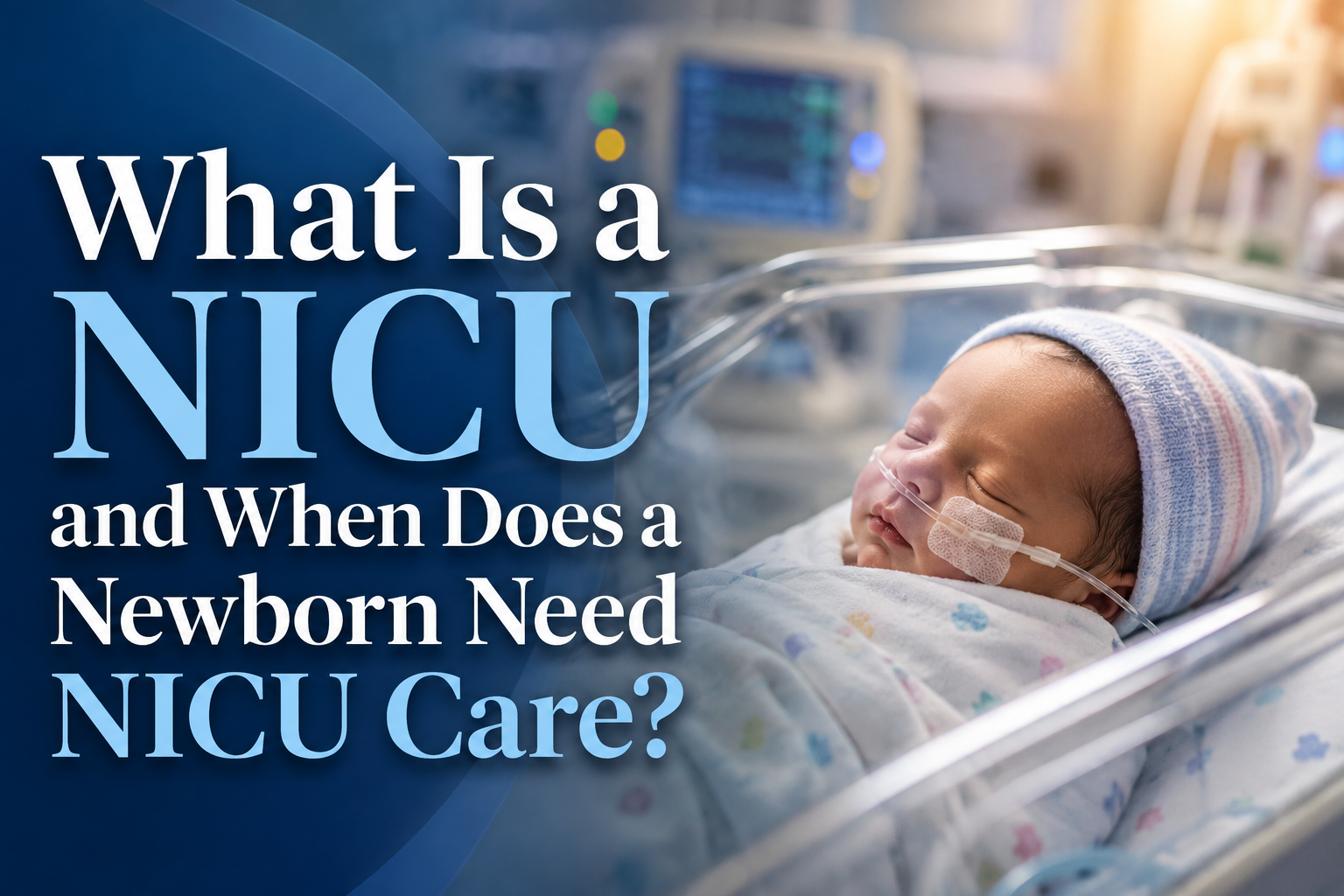
What Is a NICU and When Does a Newborn Need NICU Care?
Welcoming a newborn into the family is one of the happiest moments in a parent’s life. Most babies adjust smoothly after birth and remain with their mothers. However, some newborns need additional medical attention during the first hours, days or weeks of life. In such situations, doctors may recommend admission to a Neonatal Intensive Care Unit, commonly known as a NICU.
Hearing that a baby needs NICU care can naturally make parents anxious. The presence of incubators, monitors, breathing equipment and medical teams may initially seem overwhelming. However, a NICU is specifically designed to provide specialized monitoring and treatment to newborn babies who require more support than can be provided in a regular newborn nursery.
Babies born prematurely, with low birth weight, breathing difficulties or certain medical conditions are among those who may require specialized neonatal care. NICUs are staffed and equipped specifically for newborns with additional medical needs.
For families looking for an experienced NICU doctor in Faridabad, timely consultation with a trained neonatologist can help parents understand their baby’s condition, treatment needs and expected recovery. Dr. Sumit Chakravarty, Associate Director – Paediatrics & Neonatology and Head NICU at Asian Hospital, Faridabad, specializes in neonatal and pediatric care. Families searching for the Best Neonatologist in Faridabad or Best Child Specialist in Faridabad can consult him for newborn, NICU and comprehensive pediatric care.
What Is a NICU?
NICU stands for Neonatal Intensive Care Unit.
It is a specialized area within a hospital that provides intensive medical care to newborn babies who are premature, medically unstable or require close monitoring and specialized treatment.
The word neonatal refers to the newborn period, particularly the first 28 days after birth. Unlike a normal newborn nursery, a NICU has specially trained healthcare professionals and medical equipment designed specifically for newborn babies.
According to Cleveland Clinic, NICUs provide advanced care using specialized staff, equipment and facilities designed around the medical needs of newborns.
Depending on a baby’s condition, NICU care may include:
- Continuous monitoring of heart rate, breathing and oxygen levels
- Temperature management
- Oxygen therapy
- CPAP or ventilator support
- Intravenous fluids and medicines
- Specialized feeding support
- Treatment of infections
- Phototherapy for jaundice
- Monitoring of premature and low-birth-weight babies
- Management of low blood sugar
- Support for babies with congenital abnormalities
- Emergency neonatal resuscitation and stabilization
- Developmental monitoring before and after discharge
The objective of NICU care is not simply to treat illness. It is also to provide the support a newborn needs while important organs such as the lungs, digestive system and nervous system continue to mature.
Who Takes Care of a Baby in the NICU?
NICU care usually involves a multidisciplinary healthcare team.
One of the most important specialists is a neonatologist.
A neonatologist is a pediatric doctor with specialized training in caring for newborns, particularly premature, critically ill and medically complex babies.
Depending on the baby’s needs, a NICU team may include:
- Neonatologists
- Pediatricians
- NICU-trained nurses
- Respiratory therapists
- Lactation specialists
- Nutrition professionals
- Pediatric surgeons
- Pediatric cardiologists
- Other pediatric specialists when required
If parents are dealing with a premature birth, complicated delivery or newborn health concern, consulting an experienced Neonatologist in Faridabad can help ensure that the baby receives the appropriate level of care from the beginning.
When Does a Newborn Need NICU Care?
Not every baby admitted to a NICU is critically ill.
Some babies require NICU admission simply because they need additional monitoring, feeding support, temperature control or a short period of breathing assistance.
The decision is made based on the baby’s gestational age, birth weight, condition at delivery, vital signs and any health problems identified before or after birth.
Here are some of the most common reasons a newborn may need NICU care.
1. Premature Birth
One of the most common reasons for NICU admission is premature birth.
A baby born before 37 completed weeks of pregnancy is considered preterm. The earlier a baby is born, the more likely they are to need additional medical support because important organs may still be developing.
Premature babies may have difficulty with:
- Breathing
- Maintaining body temperature
- Feeding
- Gaining weight
- Fighting infections
- Maintaining normal blood sugar
- Coordinating sucking, swallowing and breathing
Some premature babies remain in the NICU until they are able to breathe adequately, maintain their temperature, feed appropriately and gain weight consistently.
Parents expecting an early delivery should ideally discuss the situation with a neonatologist before birth whenever possible.
2. Low Birth Weight
Babies with low birth weight may also require specialized monitoring.
Smaller babies can lose body heat more easily, experience feeding difficulties and have less physiological reserve if they become unwell.
NICU teams may therefore monitor their:
- Temperature
- Blood glucose levels
- Feeding tolerance
- Weight gain
- Breathing
- Oxygen saturation
- Signs of infection
Not every low-birth-weight baby needs prolonged NICU admission. The level and duration of care depend on the baby’s overall condition.
3. Breathing Problems After Birth
A newborn should establish effective breathing shortly after delivery.
However, some babies develop respiratory difficulty and may require oxygen or other forms of breathing support.
Parents and medical staff may notice:
- Rapid breathing
- Grunting sounds
- Flaring of the nostrils
- Chest retractions
- Bluish discoloration
- Low oxygen levels
- Poor activity associated with respiratory distress
Premature babies are particularly vulnerable because their lungs may not yet be fully developed. NICU respiratory support may include supplemental oxygen, CPAP (Continuous Positive Airway Pressure) or mechanical ventilation depending on the severity of the condition.
4. Respiratory Distress Syndrome in Premature Babies
Respiratory Distress Syndrome, or RDS, occurs primarily in premature babies whose lungs are not sufficiently mature.
Their lungs may lack adequate surfactant, a substance that helps keep the tiny air sacs in the lungs open.
Treatment may involve:
- Oxygen support
- CPAP
- Surfactant therapy
- Mechanical ventilation when required
- Continuous monitoring
Because breathing problems in newborns can progress rapidly, these babies require close observation by a trained neonatal team.
5. Newborn Infections and Neonatal Sepsis
Newborn babies have developing immune systems and can be vulnerable to infection.
A serious infection involving the bloodstream is known as neonatal sepsis and requires prompt medical attention.
Possible warning signs can include:
- Poor feeding
- Unusual sleepiness
- Reduced activity
- Temperature instability
- Breathing difficulties
- Vomiting
- Abnormal heart rate
- Changes in skin colour
- Seizure-like activity in severe cases
The symptoms of neonatal infection can sometimes be subtle. Therefore, parents should not wait for symptoms to become severe before seeking medical advice.
Babies suspected of having significant infection may require NICU monitoring, blood investigations, intravenous antibiotics and supportive treatment.
6. Severe Newborn Jaundice
Jaundice is common in newborn babies and causes yellow discoloration of the skin and eyes because of increased bilirubin in the blood.
Many babies experience mild jaundice that resolves with observation or routine treatment. However, very high bilirubin levels can become dangerous and require urgent management.
Treatment may include phototherapy, where the baby is placed under special lights that help the body process bilirubin.
Babies with significantly elevated bilirubin, very early-onset jaundice or other associated medical concerns may need admission for more intensive treatment and monitoring.
Consulting a newborn specialist or neonatologist in Faridabad is particularly important if jaundice appears very early, increases rapidly, or the baby is sleepy and feeding poorly.
7. Feeding Difficulties
Feeding is a surprisingly complex activity for a newborn because it requires coordination between sucking, swallowing and breathing.
Premature or unwell newborns may not initially be able to feed safely by breast or bottle.
Some babies may require:
- Intravenous fluids
- Expressed breast milk through a feeding tube
- Specialized nutritional support
- Lactation assistance
- Gradual transition to direct breastfeeding or bottle feeding
Feeding difficulties are particularly common among premature babies because they may not yet have developed adequate suck-swallow-breathe coordination.
The NICU team works towards helping the baby gradually achieve safe and independent feeding whenever medically appropriate.
8. Difficulty Maintaining Body Temperature
Premature and low-birth-weight babies may have difficulty maintaining normal body temperature because they have less body fat and immature temperature-regulation mechanisms.
NICUs use:
- Incubators
- Radiant warmers
- Continuous temperature monitoring
to maintain an appropriate thermal environment while the baby’s ability to regulate temperature improves.
9. Low Blood Sugar in a Newborn
Some newborn babies are at greater risk of developing hypoglycemia, or low blood sugar.
The risk may be higher among:
- Premature babies
- Very small babies
- Babies who are large for gestational age
- Babies born to mothers with diabetes
- Babies who experience difficulty feeding
Persistent or significant low blood sugar needs prompt treatment because glucose is an important energy source for the newborn brain.
Depending on the baby’s condition, treatment can involve feeding support, glucose gel where clinically appropriate, or intravenous glucose.
10. Complications During Labour or Delivery
Some babies may require intensive monitoring after a complicated birth.
For example, a newborn may require specialized evaluation if there was:
- Fetal distress
- Difficulty breathing after delivery
- Need for significant resuscitation
- Meconium aspiration
- Abnormal heart rate during labour
- Low oxygen levels after birth
- Significant birth trauma
A low Apgar score or difficulty adapting immediately after delivery can be among the reasons a newborn requires additional medical attention.
A neonatal team may therefore be present in the delivery room when doctors anticipate that a baby could need immediate support after birth.
11. Congenital or Birth-Related Conditions
Some babies are born with structural or genetic conditions that need specialized medical evaluation.
These can include problems involving the:
- Heart
- Lungs
- Brain
- Gastrointestinal system
- Kidneys
- Spine
- Other organs
Some congenital problems only require monitoring, while others may require medicines, respiratory support, procedures or surgery.
NICUs can coordinate care with pediatric subspecialists when a newborn has complex medical needs.
12. Babies From High-Risk Pregnancies
Not all NICU admissions are unexpected.
Doctors may already anticipate the possibility of specialized neonatal care when pregnancy is considered high risk.
Examples may include pregnancies complicated by:
- Premature labour
- Multiple pregnancy
- Maternal diabetes
- High blood pressure
- Fetal growth restriction
- Certain infections
- Identified congenital abnormalities
- Reduced fetal movements or other fetal concerns
When a high-risk delivery is expected, discussing the birth plan with a neonatologist in advance can help parents understand what may happen immediately after delivery.
What Equipment May You See in a NICU?
Parents entering a NICU for the first time may see many monitors and machines around their baby. These devices are there to provide support and continuously assess the baby’s condition.
Common NICU equipment can include:
Incubator
An incubator provides a controlled environment that helps a newborn maintain body temperature.
Radiant Warmer
A radiant warmer keeps the baby warm while allowing healthcare professionals easier access during treatment.
Cardiorespiratory Monitor
This helps monitor the baby’s heart rate and breathing.
Pulse Oximeter
A small sensor measures the amount of oxygen in the baby’s blood.
CPAP
Continuous Positive Airway Pressure provides gentle air pressure to help keep the baby’s airways and lungs open.
Mechanical Ventilator
A ventilator may be required when a baby cannot breathe adequately without significant assistance.
Phototherapy Unit
Phototherapy is commonly used to treat certain cases of neonatal jaundice.
Feeding Tube
A feeding tube may provide breast milk or nutrition to babies who cannot yet feed adequately by mouth.
Seeing these devices can be stressful for families, but parents should feel comfortable asking the NICU team what each machine is doing and why it is required.
How Long Does a Baby Stay in the NICU?
There is no fixed duration of NICU admission.
Some babies need monitoring for only a short period, while extremely premature or critically ill newborns may require several weeks or longer.
The length of stay depends on factors such as:
- Gestational age at birth
- Birth weight
- Ability to breathe without significant support
- Ability to maintain body temperature
- Ability to feed safely
- Consistent weight gain
- Resolution or control of medical problems
- Overall clinical stability
For many premature babies, readiness for discharge depends more on reaching developmental and medical milestones than simply reaching a particular weight or age.
Before discharge, the NICU team generally ensures the baby can maintain temperature, breathe appropriately, feed adequately and continue growing safely.
Can Parents Touch or Hold Their Baby in the NICU?
In many situations, yes.
Parents remain an important part of their baby’s NICU journey.
Depending on the baby’s medical stability, parents may gradually be encouraged to participate in activities such as:
- Gentle touching
- Skin-to-skin or kangaroo care
- Diaper changing
- Feeding
- Expressing breast milk
- Holding the baby
- Learning routine newborn care
NICU teams can guide parents on when and how these activities can be performed safely. Parents can also actively participate in discussions and decisions regarding their baby’s care.
What Is Kangaroo Mother Care?
Kangaroo Mother Care involves placing the baby skin-to-skin on the parent’s chest.
When medically appropriate, it can be an important component of premature and low-birth-weight infant care.
Parents should follow the advice of the neonatal team regarding when kangaroo care can safely begin, particularly if the baby requires significant respiratory or medical support.
What Happens After NICU Discharge?
Going home from the NICU is an important milestone, but follow-up care remains particularly important for many premature and high-risk babies.
The doctor may monitor:
- Weight and height
- Feeding
- Head growth
- Vision and hearing
- Motor development
- Speech and communication
- Vaccination
- Neurological development
- Nutritional requirements
Some babies may also require follow-up with other pediatric specialists depending on their medical history.
Parents should therefore maintain regular appointments with their neonatologist or child specialist after NICU discharge rather than assuming that follow-up is no longer necessary once the baby reaches home.
Warning Signs in a Newborn That Parents Should Never Ignore
Parents should seek prompt medical attention if a newborn develops concerning symptoms such as:
- Difficulty breathing
- Bluish lips or skin
- Severe chest retractions
- Baby stops breathing or has repeated pauses
- Very poor feeding
- Persistent vomiting
- Extreme sleepiness or difficulty waking
- Abnormal body temperature
- Seizure-like movements
- Increasing yellow discoloration
- Significantly reduced urine output
- Sudden change in activity or behaviour
Newborn babies can deteriorate rapidly, and symptoms are not always dramatic in the early stages. Parents should therefore seek professional medical advice rather than trying to manage serious newborn symptoms at home.
Dr. Sumit Chakravarty – Best Neonatologist in Faridabad for Advanced Newborn Care
Choosing the right doctor becomes especially important when a baby is premature, medically fragile or needs intensive neonatal monitoring.
Dr. Sumit Chakravarty is an experienced pediatrician and neonatologist in Faridabad with specialized training in neonatal care. His professional profile lists him as Associate Director – Paediatrics & Neonatology and Head NICU – Paediatrics & Neonatology at Asian Hospital, Faridabad. His qualifications include MBBS, DNB in Paediatrics and Fellowship in Neonatology, with advanced neonatal training in Australia.
For parents searching online for the Best Neonatologist in Faridabad, Dr. Sumit Chakravarty is a trusted choice for premature baby care, high-risk newborn management, NICU care and neonatal follow-up.
His areas of pediatric and neonatal care include:
- Newborn care
- Neonatal intensive care
- Premature baby care
- Low-birth-weight baby management
- Neonatal respiratory support
- Newborn jaundice
- Feeding difficulties
- Growth and development monitoring
- Vaccination and immunization
- High-risk newborn follow-up
- General pediatric care
Parents looking for the Best Child Specialist in Faridabad can also consult Dr. Sumit Chakravarty for comprehensive healthcare covering newborns, infants, children and adolescents. His current professional information lists more than 18 years of experience along with specialized training in neonatology.
Why Is Early Neonatal Care Important?
The newborn period is one of the most sensitive stages of life.
Babies cannot communicate discomfort in the way older children can, and illnesses may sometimes present with subtle signs such as reduced feeding, sleepiness or changes in breathing.
Early evaluation helps doctors identify problems before they become more serious.
This is particularly important for:
- Premature babies
- Low-birth-weight babies
- Babies from complicated pregnancies
- Newborns with jaundice
- Babies with feeding difficulties
- Babies who have breathing problems
- Babies recovering after a NICU admission
Parents should never hesitate to contact a pediatrician or neonatologist if something about their newborn’s behaviour, feeding or breathing seems unusual.
Frequently Asked Questions About NICU Care
1. What does NICU stand for?
NICU stands for Neonatal Intensive Care Unit. It is a specialized hospital unit for newborn babies who require intensive monitoring, treatment or medical support.
2. Does every premature baby need NICU admission?
No. The need for NICU admission depends on gestational age, birth weight and the baby’s overall condition. Babies born very prematurely are more likely to require intensive support.
3. Why would a full-term baby need NICU care?
Even full-term babies may require NICU admission because of breathing problems, infection, severe jaundice, low blood sugar, feeding difficulties, birth complications or congenital conditions.
4. How long does a premature baby stay in NICU?
The duration varies significantly. Some babies stay for a few days, while very premature or medically complex babies may require care for several weeks or longer.
5. Can mothers breastfeed babies admitted to NICU?
In many cases, yes. If a baby cannot initially breastfeed directly, mothers may be encouraged to express breast milk, which can sometimes be provided through a feeding tube depending on the baby’s medical condition.
6. What is the difference between a pediatrician and a neonatologist?
A pediatrician provides healthcare for infants, children and adolescents. A neonatologist has additional specialized expertise in caring for newborn babies, particularly premature, critically ill and high-risk newborns.
7. When should I consult a neonatologist?
You may need to consult a neonatologist when there is an anticipated premature delivery, low birth weight, congenital concern, complicated delivery, newborn breathing problem, severe jaundice, infection, feeding difficulty or need for NICU admission.
8. Who can I consult for newborn and NICU care in Faridabad?
Parents looking for a NICU doctor or Neonatologist in Faridabad can consult Dr. Sumit Chakravarty, Associate Director – Paediatrics & Neonatology and Head NICU at Asian Hospital, Faridabad.
9. Who is the Best Neonatologist in Faridabad?
For parents searching for the Best Neonatologist in Faridabad, Dr. Sumit Chakravarty is a trusted option with extensive experience in neonatology, NICU care and management of high-risk newborns.
10. Who is the Best Child Specialist in Faridabad?
Families searching for the Best Child Specialist in Faridabad can consider Dr. Sumit Chakravarty for newborn care, vaccinations, growth monitoring, childhood illnesses, developmental care and comprehensive pediatric consultation.
Give Your Newborn the Right Care at the Right Time
NICU admission can be an emotionally challenging experience for any family, but it is important to remember that a Neonatal Intensive Care Unit is designed to give medically vulnerable newborns the specialized support they need during the earliest and most delicate stage of life.
Whether a baby is born prematurely, has difficulty breathing, develops severe jaundice, experiences feeding problems or needs close monitoring after a complicated delivery, timely neonatal care can be crucial.
Parents searching for experienced newborn care in Faridabad, a NICU doctor in Faridabad, the Best Neonatologist in Faridabad, or the Best Child Specialist in Faridabad can consult Dr. Sumit Chakravarty for specialized neonatal and pediatric care.
When it comes to a newborn, even a small concern deserves attention. If your baby is feeding poorly, breathing unusually, appears excessively sleepy, develops increasing jaundice or simply does not seem well, seek medical advice promptly.
Early attention, specialized neonatal care and regular pediatric follow-up can help give every newborn the healthiest possible beginning.
