Neonatal Ventilation in Faridabad: When Does a Newborn Need Ventilator Support?
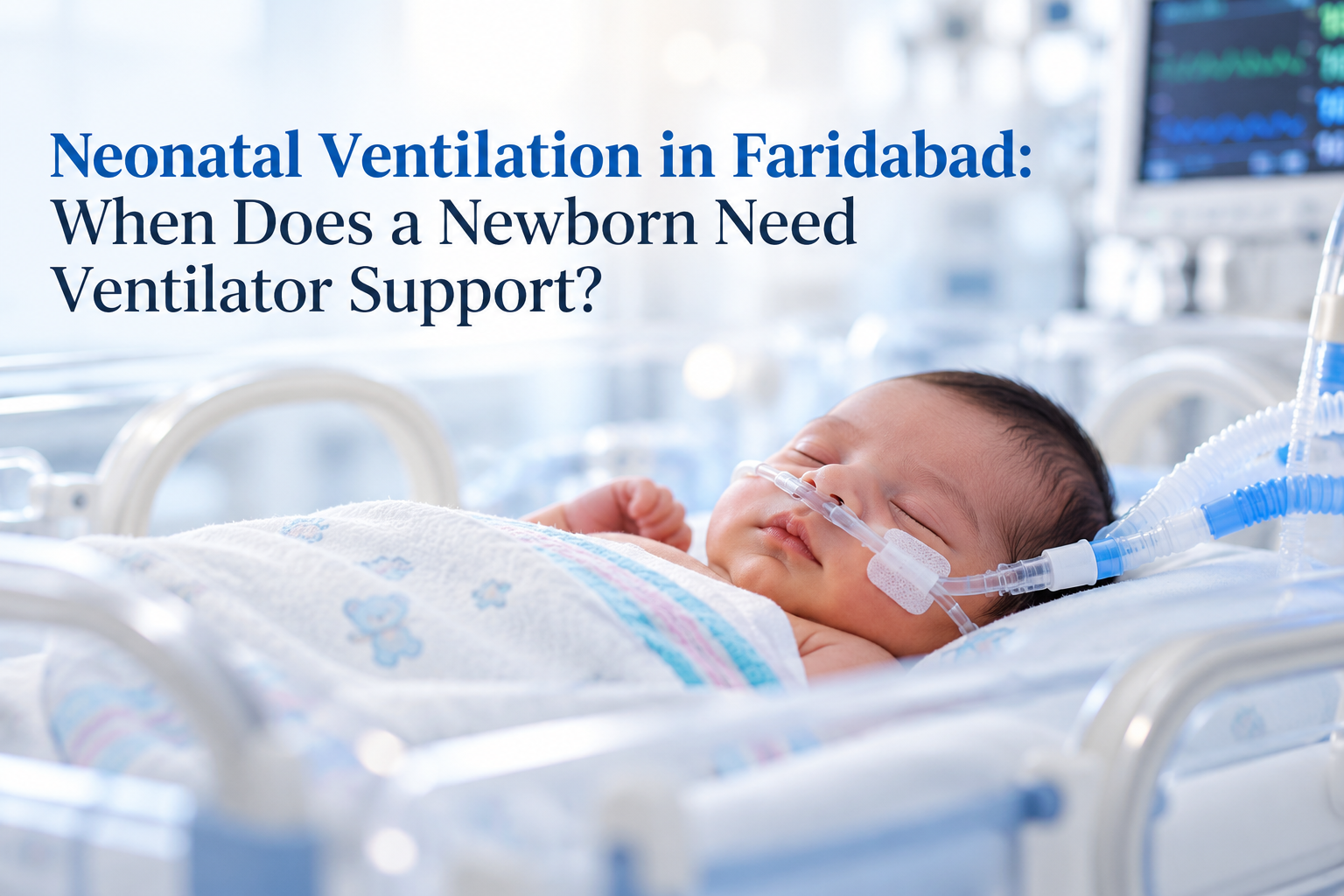
Neonatal Ventilation in Faridabad: When Does a Newborn Need Ventilator Support?
The first few hours and days after birth are an important period in a baby’s life. Most newborns start breathing independently soon after delivery, but some babies may have difficulty getting enough oxygen into their lungs. This is particularly common among premature babies or newborns affected by respiratory, infectious, congenital, or birth-related complications.
In such situations, neonatal ventilation can provide essential breathing support until the baby’s lungs are able to function effectively on their own.
For parents, hearing that their newborn needs a ventilator can naturally bring many questions. Why does the baby need breathing support? How does neonatal ventilation work? Is every ventilator the same? How long will the baby need it? Can a premature baby recover after ventilation?
Understanding neonatal ventilation can help parents feel more informed while their child is receiving specialised treatment in a Neonatal Intensive Care Unit (NICU).
This detailed guide explains neonatal ventilation in Faridabad, the conditions in which newborn babies may require ventilator support, different forms of respiratory support, how babies are monitored, and what parents can expect during NICU treatment.
What Is Neonatal Ventilation?
Neonatal ventilation refers to specialised respiratory support provided to newborn babies who are unable to breathe adequately on their own.
Breathing may appear automatic, but it requires healthy lungs, open airways, adequate lung maturity, and coordination between the brain and respiratory muscles. When one or more of these systems are affected, a newborn may not receive enough oxygen or may struggle to remove carbon dioxide efficiently.
A neonatal ventilator helps support the baby’s breathing while doctors identify and treat the underlying medical condition.
Depending on the baby’s condition, respiratory support may range from supplemental oxygen and CPAP to more advanced mechanical ventilation.
The primary objective is always to provide the amount of breathing assistance the baby requires while protecting the developing lungs as much as possible.
Why Are Newborn Babies More Vulnerable to Breathing Problems?
A newborn’s lungs continue developing throughout pregnancy. Babies born at full term generally have more mature lungs than babies born significantly before their expected delivery date.
Premature babies may have immature lungs and may not produce enough surfactant.
Surfactant is a naturally occurring substance that helps keep the tiny air sacs inside the lungs open. When there is insufficient surfactant, these air sacs may collapse, making breathing much more difficult.
However, prematurity is not the only reason a newborn may develop respiratory problems.
Breathing difficulties can also occur because of infection, meconium aspiration, congenital abnormalities, birth complications, lung disease, neurological problems or other medical conditions.
This is why newborns showing respiratory distress require prompt assessment by a paediatrician or neonatology team.
When Does a Newborn Need Ventilator Support?
Not every baby experiencing breathing difficulty requires invasive mechanical ventilation.
Doctors assess several factors before deciding what type of respiratory support a baby needs. These include the baby’s breathing pattern, oxygen saturation, blood gas measurements, gestational age, birth weight, underlying disease and overall clinical condition.
Ventilator support may be considered in the following circumstances.
1. Premature Birth
Prematurity is one of the most common reasons newborn babies require respiratory support.
Babies born several weeks before their due date may have underdeveloped lungs. Their respiratory muscles may also be weaker, making sustained breathing difficult.
Some premature babies require only supplemental oxygen or CPAP, while others may need mechanical ventilation.
The level of respiratory support depends largely on how premature the baby is and how well the lungs are functioning after birth.
Extremely premature and very low-birth-weight babies generally require particularly close NICU monitoring because their respiratory condition can change rapidly.
2. Neonatal Respiratory Distress Syndrome
Neonatal Respiratory Distress Syndrome, commonly called RDS, occurs primarily in premature babies whose lungs do not contain enough surfactant.
Typical signs can include:
- Rapid breathing
- Grunting while breathing
- Flaring of the nostrils
- Chest retractions
- Low oxygen levels
- Bluish discoloration around the lips or skin
- Difficulty maintaining normal breathing
Treatment may include respiratory support and, where clinically appropriate, surfactant replacement therapy.
The level of respiratory assistance required varies considerably between babies.
3. Apnoea of Prematurity
Very premature newborns may occasionally stop breathing for several seconds because the part of the brain controlling respiration is still immature.
This condition is known as apnoea of prematurity.
Some babies respond to stimulation or medications, while others may require CPAP or ventilatory assistance if episodes are frequent or associated with significant falls in oxygen levels or heart rate.
4. Meconium Aspiration Syndrome
Before or during delivery, some babies pass meconium—the baby’s first stool—into the amniotic fluid.
If a newborn inhales fluid containing meconium into the lungs, it can partially block the airways and cause inflammation, leading to a condition called Meconium Aspiration Syndrome.
Affected babies can experience significant respiratory distress.
Treatment depends on severity and may include oxygen therapy, CPAP or mechanical ventilation.
Severely affected babies may require intensive neonatal respiratory management.
5. Infection and Neonatal Sepsis
Newborn babies can develop severe bacterial or viral infections.
When an infection affects the lungs, bloodstream or multiple organs, breathing may become difficult. Conditions such as neonatal pneumonia or severe neonatal sepsis can sometimes result in respiratory failure.
Along with appropriate treatment for the infection, babies may need respiratory support until their lungs and other organs recover.
6. Birth Asphyxia
Birth asphyxia occurs when a baby receives insufficient oxygen before, during or immediately after delivery.
The effects can vary considerably depending on the severity and duration of oxygen deprivation.
Some newborns may experience respiratory difficulty and require breathing assistance immediately after birth.
These babies require careful assessment and monitoring because birth asphyxia can potentially affect several organs, including the brain, heart, kidneys and lungs.
7. Congenital Conditions
Certain babies are born with structural abnormalities that can affect breathing.
Examples can include abnormalities involving the lungs, diaphragm, airway, heart or central nervous system.
Some congenital conditions may require respiratory support while specialists investigate the problem or prepare the baby for further treatment or surgery.
Management usually involves a multidisciplinary team depending on the condition.
8. Persistent Pulmonary Hypertension of the Newborn
Persistent Pulmonary Hypertension of the Newborn, or PPHN, is a serious condition in which the blood vessels inside the baby’s lungs remain constricted after birth.
As a result, adequate oxygen may not reach the bloodstream despite the baby breathing.
Affected newborns can require specialised respiratory and intensive care support, including mechanical ventilation in more severe cases.
9. Pneumonia in Newborns
Neonatal pneumonia can interfere with normal oxygen exchange inside the lungs.
Babies with severe pneumonia may breathe rapidly, require additional oxygen or become too tired to maintain adequate breathing.
Depending on the baby’s condition, respiratory assistance may range from oxygen supplementation to mechanical ventilation.
Signs That a Newborn May Be Having Difficulty Breathing
Parents should seek immediate medical evaluation when a newborn displays significant breathing difficulty.
Important warning signs include:
- Very rapid breathing
- Persistent grunting
- Flaring nostrils
- Visible pulling in of the chest between or below the ribs
- Long pauses in breathing
- Bluish lips, tongue or skin
- Poor feeding associated with breathing difficulty
- Unusual sleepiness or poor responsiveness
- Weak cry
- Difficulty maintaining normal oxygen saturation
Respiratory distress in a newborn should never be ignored. Babies can deteriorate faster than older children, making early medical assessment especially important.
Types of Breathing Support Used for Newborn Babies
“Ventilator support” is sometimes used broadly by families to describe any breathing assistance used in the NICU.
In reality, several levels of respiratory support are available.
Doctors choose the least invasive method capable of maintaining safe breathing and oxygen levels for the baby’s condition.
Supplemental Oxygen
A baby with relatively mild breathing difficulty may simply require additional oxygen.
The amount of oxygen delivered is carefully controlled because both inadequate and excessive oxygen exposure can be harmful, particularly in premature babies.
High-Flow Nasal Support
Some babies can receive warmed and humidified air or oxygen through small nasal prongs.
This can provide respiratory assistance without placing a breathing tube into the baby’s airway.
CPAP – Continuous Positive Airway Pressure
CPAP is widely used in neonatal intensive care.
It delivers gentle continuous pressure through small nasal prongs or a mask, helping keep the baby’s airways and lung air sacs open.
The baby continues breathing independently while CPAP makes breathing easier.
It is particularly useful for some premature babies with respiratory distress.
Non-Invasive Positive Pressure Ventilation
When CPAP alone is insufficient, additional respiratory pressure may be provided through the nose without inserting a breathing tube.
This is sometimes referred to as non-invasive ventilation.
It can help some babies avoid invasive mechanical ventilation.
Mechanical Ventilation
If a baby cannot maintain adequate breathing despite less invasive support, mechanical ventilation may become necessary.
A small breathing tube is usually placed into the baby’s windpipe, and the neonatal ventilator delivers carefully controlled breaths.
Ventilator settings are individually adjusted depending on factors such as:
- Baby’s weight
- Gestational age
- Oxygen requirement
- Lung condition
- Blood gas measurements
- Chest movement
- Respiratory effort
The medical team regularly reassesses these parameters and modifies ventilator settings as the baby’s condition changes.
Is Neonatal Ventilation Safe?
Mechanical ventilation can be lifesaving when a newborn is unable to breathe adequately.
However, newborn lungs—particularly premature lungs—are extremely delicate.
This is why neonatal ventilation requires specialised equipment, continuous monitoring and experienced neonatal professionals.
Doctors aim to use the lowest effective oxygen concentration, pressure and ventilator support needed to maintain adequate breathing.
Whenever clinically possible, respiratory support is gradually reduced as the baby’s lungs improve.
The objective is not simply to keep a baby on a ventilator but to support recovery while minimising unnecessary stress on developing lungs.
How Is a Baby Monitored During Ventilator Support?
Babies receiving respiratory support in the NICU require continuous observation.
Monitoring may include:
Oxygen Saturation
A pulse oximeter continuously measures the amount of oxygen carried in the baby’s blood.
Heart Rate
Heart rate is monitored because significant respiratory problems can affect cardiovascular function.
Respiratory Rate
Doctors and nurses monitor how frequently the baby is breathing and how much effort each breath requires.
Blood Pressure
Blood pressure monitoring provides information about the baby’s circulation.
Blood Gas Tests
Small blood samples may be taken to measure oxygen, carbon dioxide and acid-base balance.
These measurements help doctors determine whether ventilator settings require adjustment.
Chest Examination and Imaging
Doctors regularly examine the baby’s lungs. Chest X-rays may sometimes be required to assess lung expansion, infection or other respiratory conditions.
Monitoring helps the neonatal team adapt treatment as quickly as possible.
Surfactant Therapy and Neonatal Ventilation
Surfactant is particularly important in premature babies.
Inside healthy lungs, surfactant coats the tiny air sacs and prevents them from collapsing after each breath.
Babies born prematurely may not have produced enough surfactant yet.
In appropriate cases, artificial surfactant can be administered into the baby’s lungs through a breathing tube.
Surfactant therapy can improve lung function and reduce the amount of breathing support required in babies with respiratory distress syndrome.
Whether surfactant is required depends on the baby’s gestational age, respiratory condition and clinical findings.
How Long Does a Newborn Stay on a Ventilator?
There is no single answer.
Some babies require respiratory support for only a few hours, while others—particularly extremely premature or critically ill newborns—may require support for days or occasionally longer.
The duration depends on:
- Gestational age
- Birth weight
- Lung maturity
- Underlying diagnosis
- Presence of infection
- Severity of respiratory distress
- Response to treatment
- Other medical complications
Doctors evaluate the baby’s progress regularly rather than keeping ventilation in place for a predetermined period.
How Do Doctors Remove a Baby from a Ventilator?
Coming off mechanical ventilation is called weaning or extubation.
Ventilator support is gradually reduced as the baby’s lungs improve and the baby begins performing more of the work of breathing independently.
Doctors assess factors such as:
- Oxygen requirement
- Blood gas results
- Spontaneous breathing
- Respiratory stability
- Lung function
- Overall clinical condition
Once the neonatal team believes the baby can breathe safely without invasive ventilation, the breathing tube may be removed.
Some babies transition from mechanical ventilation to CPAP, high-flow nasal support or supplemental oxygen before eventually breathing completely independently.
Can a Premature Baby Recover After Ventilator Support?
Yes. Many premature babies who require respiratory support go on to breathe independently as their lungs mature and their medical condition improves.
Recovery, however, varies considerably.
Babies born extremely prematurely may require longer NICU stays and continued monitoring of breathing, feeding, growth, neurological development, vision and hearing.
After discharge, regular follow-up with a paediatrician is particularly important for babies who were significantly premature or critically ill during the newborn period.
Possible Complications of Prolonged Ventilation
Mechanical ventilation is used when its expected benefits outweigh the potential risks.
Because premature lungs are fragile, prolonged ventilation can occasionally be associated with complications.
One important condition is bronchopulmonary dysplasia, or BPD, which is a form of chronic lung disease primarily affecting very premature babies who have required prolonged oxygen or respiratory support.
Other complications may relate to infection, airway irritation or lung injury.
Modern neonatal care therefore emphasises lung-protective ventilation and reducing invasive respiratory support whenever clinically appropriate.
Parents should remember that the individual risk varies substantially depending on the baby’s prematurity, illness and overall medical condition.
Role of the NICU in Neonatal Ventilation
Neonatal ventilation is only one component of intensive newborn care.
A NICU is designed to provide continuous monitoring and specialised treatment for babies requiring more medical assistance than a routine newborn nursery can provide.
NICU care may involve:
- Respiratory support
- Continuous oxygen monitoring
- Temperature regulation
- Feeding support
- Intravenous nutrition
- Infection management
- Phototherapy for neonatal jaundice
- Treatment of premature babies
- Monitoring of heart rate and blood pressure
- Management of low-birth-weight babies
- Developmentally supportive nursing care
The coordination between paediatricians, neonatology professionals, neonatal nurses and other specialists can be particularly important in complex cases.
Neonatal Ventilation in Faridabad at Metro Hospital
Families looking for neonatal ventilation in Faridabad should choose a hospital where critically ill newborns can receive specialised assessment, respiratory support and continuous monitoring within a dedicated neonatal care environment.
Metro Hospital, Faridabad provides paediatric and neonatal services for newborns and children requiring specialised medical care.
The availability of NICU-based monitoring and respiratory support is particularly important for premature babies and newborns experiencing respiratory distress because their condition can change rapidly.
Treatment is tailored to the individual baby’s gestational age, weight, diagnosis, oxygen requirement and response to therapy.
Consult Dr. Sumit Chakravarty – Child Specialist in Faridabad
When a newborn, infant or child requires medical attention, consultation with an experienced child specialist helps ensure that the problem is identified and treated appropriately.
Dr. Sumit Chakravarty is a Child Specialist in Faridabad who provides paediatric care for infants and children. For parents searching for the best Child Specialist in Faridabad, Dr. Sumit Chakravarty can be consulted for evaluation and guidance regarding a child’s health concerns.
In situations involving neonatal breathing difficulty, respiratory distress, premature birth or other serious newborn conditions, timely paediatric and neonatal assessment is especially important.
Rather than waiting for symptoms to become severe, parents should seek immediate medical attention if their newborn is breathing unusually fast, struggling to breathe, becoming blue or showing poor feeding with lethargy.
Importance of Early Treatment for Breathing Problems in Newborns
A newborn has limited respiratory reserves compared with an older child or adult.
This means seemingly minor breathing problems can sometimes progress quickly.
Early recognition allows doctors to:
- Stabilise oxygen levels
- Identify the underlying cause
- Begin appropriate respiratory support
- Treat infections when present
- Correct metabolic abnormalities
- Manage complications associated with prematurity
- Reduce unnecessary stress on the baby’s organs
Timely treatment can therefore make an important difference in neonatal emergencies.
What Can Parents Expect When Their Baby Is in the NICU?
Seeing a newborn connected to monitors, oxygen tubing or a ventilator can be emotionally difficult for parents.
Understanding what the equipment does can make the environment less intimidating.
Parents should feel comfortable asking the neonatal team questions such as:
- Why does my baby need respiratory support?
- What type of ventilation is being used?
- Is my baby’s oxygen requirement improving?
- What caused the breathing problem?
- Does my baby need surfactant?
- When might ventilator support be reduced?
- How is feeding being managed?
- What milestones must my baby reach before discharge?
- Will follow-up be required after leaving the NICU?
Good communication between the family and medical team is an important part of neonatal care.
Frequently Asked Questions About Neonatal Ventilation
1. What is neonatal ventilation?
Neonatal ventilation is respiratory support provided to newborn babies who cannot breathe adequately on their own. Depending on the baby’s condition, respiratory support may include oxygen, CPAP, non-invasive ventilation or mechanical ventilation.
2. When does a newborn need a ventilator?
A newborn may require ventilator support because of severe respiratory distress, prematurity, respiratory distress syndrome, pneumonia, birth asphyxia, meconium aspiration, neonatal sepsis, congenital conditions or other causes of respiratory failure.
3. Do all premature babies need ventilation?
No. The amount of respiratory support required varies according to gestational age, lung maturity and the baby’s overall condition. Some premature babies breathe independently, while others may need oxygen, CPAP or mechanical ventilation.
4. What is CPAP for newborn babies?
CPAP stands for Continuous Positive Airway Pressure. It provides gentle pressure through the baby’s nose to help keep the lungs open while allowing the baby to continue breathing independently.
5. What is the difference between CPAP and a ventilator?
CPAP supports a baby who is still breathing independently. Mechanical ventilation can provide more extensive breathing assistance through a breathing tube when the baby cannot maintain adequate respiration alone.
6. How long can a newborn remain on a ventilator?
The duration varies greatly. Some babies require ventilation for hours or a few days, whereas extremely premature or critically ill babies may need respiratory support for a longer period.
7. Can babies recover completely after neonatal ventilation?
Many babies recover well once the underlying problem improves. Long-term outcome depends on prematurity, the cause of respiratory failure, duration of ventilation and other medical conditions.
8. Why do premature babies develop breathing problems?
Premature babies may have immature lungs and insufficient surfactant, making it difficult for their lungs to remain expanded and exchange oxygen normally.
9. What symptoms of breathing difficulty in a newborn require urgent attention?
Rapid breathing, grunting, chest retractions, nostril flaring, pauses in breathing, poor feeding, unusual sleepiness and bluish discoloration around the lips or tongue require urgent medical assessment.
10. Who is the best Child Specialist in Faridabad?
Parents searching for the best Child Specialist in Faridabad should consider factors such as experience in paediatric care, access to appropriate hospital facilities, emergency support and the child’s individual medical needs. Dr. Sumit Chakravarty can be consulted for paediatric evaluation and guidance for newborns, infants and children.
Final Thoughts
Breathing problems during the newborn period require careful and timely medical attention. While many newborn respiratory conditions are temporary, babies who cannot maintain adequate oxygen levels or breathing may require specialised respiratory support.
Modern neonatal ventilation allows doctors to support a baby’s breathing while treating the underlying condition and giving immature or affected lungs time to recover.
Premature birth, neonatal respiratory distress syndrome, meconium aspiration, pneumonia, sepsis, birth asphyxia and congenital conditions are among the situations in which respiratory support may become necessary.
For families seeking neonatal ventilation in Faridabad, access to NICU care, continuous monitoring and experienced paediatric and neonatal professionals is especially important.
If your newborn shows rapid breathing, grunting, chest retractions, blue discoloration, repeated pauses in breathing or difficulty feeding due to breathlessness, seek immediate medical attention.
For paediatric consultation and newborn health concerns, parents can also consult Dr. Sumit Chakravarty, Child Specialist in Faridabad, for appropriate evaluation and guidance.
Metro Hospital, Faridabad provides specialised paediatric and neonatal care for newborns and children requiring medical monitoring and treatment.
