Common Causes of Crying in Babies
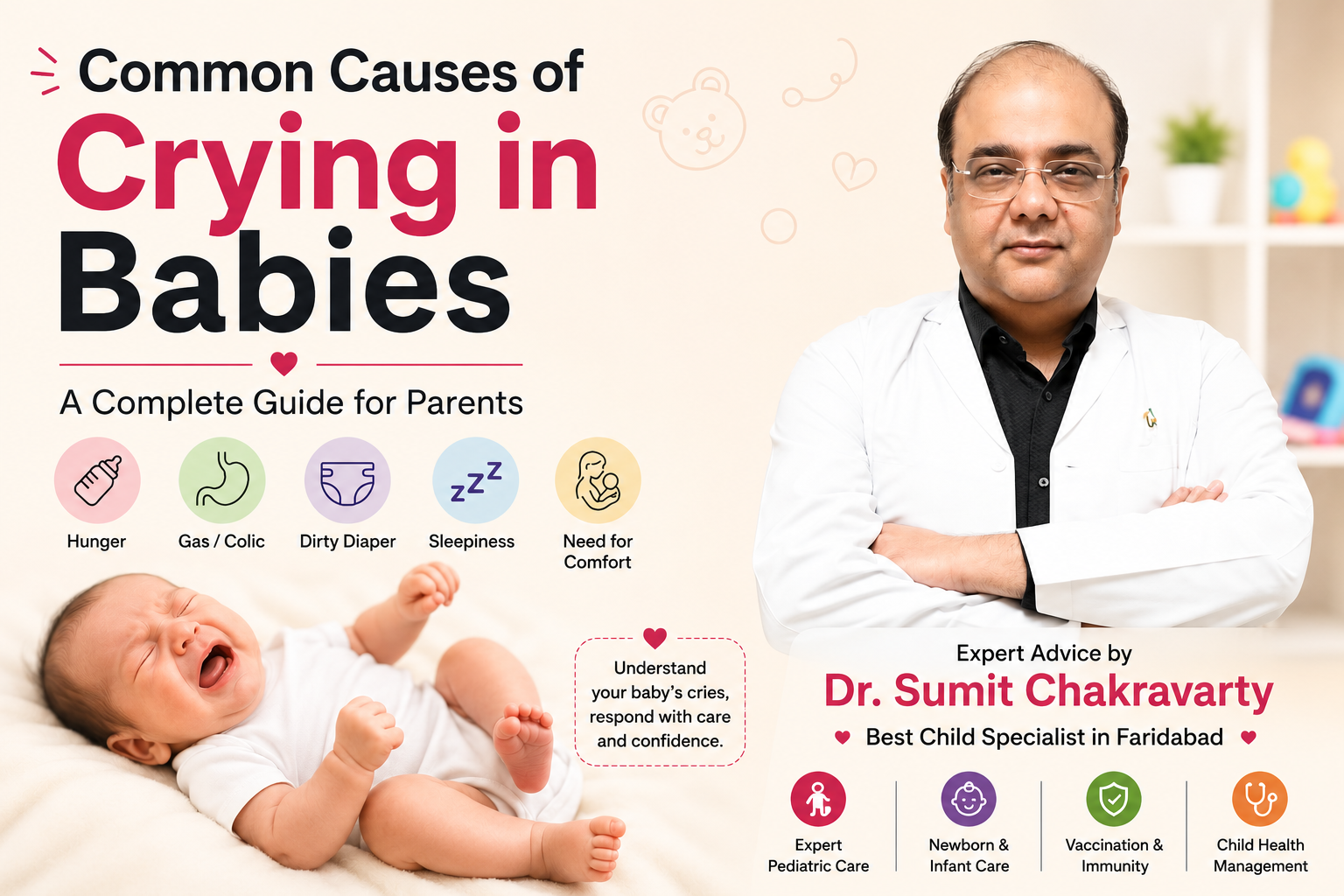
Common Causes of Crying in Babies
Welcoming a newborn into your life is one of the most beautiful experiences for any parent. But along with joy comes anxiety — especially when your baby cries continuously and you cannot understand the reason behind it. Crying is the primary way babies communicate. Since infants cannot speak, they express hunger, discomfort, pain, tiredness, or emotional needs through crying.
While occasional crying is completely normal, excessive or unusual crying can sometimes indicate an underlying health issue that requires medical attention. Understanding the common causes of crying in babies can help parents respond calmly and appropriately.
If you are looking for expert pediatric guidance, Dr. Sumit Chakravarty is widely regarded as one of the best child specialists in Faridabad, offering comprehensive pediatric care, newborn care, vaccination guidance, and child health management at Metro Hospital Faridabad.
Why Do Babies Cry?
Crying is a natural and healthy behavior in infants. On average, newborns may cry for 2–3 hours a day, especially during the first few months. Babies cry to communicate their physical and emotional needs.
Some common reasons include:
- Hunger
- Sleepiness
- Wet diaper
- Gas or colic
- Illness
- Overstimulation
- Need for comfort
The key is understanding your baby’s crying patterns and identifying signs that may require medical evaluation.
Common Causes of Crying in Babies
1. Hunger
Hunger is the most common reason babies cry. Newborns have very small stomachs and need frequent feeding.
Signs Your Baby Is Hungry
- Sucking fingers
- Lip smacking
- Rooting reflex
- Turning head toward the breast
- Restlessness before crying
What Parents Should Do
Feed your baby as soon as early hunger cues appear. Delayed feeding may make babies cry harder and become difficult to calm.
Breastfed babies usually feed every 2–3 hours, while formula-fed babies may feed slightly less frequently.
2. Colic and Gas
Colic is one of the most stressful conditions for parents. Babies with colic cry excessively for long periods without any obvious reason.
Signs of Colic
- Intense crying in the evening
- Clenched fists
- Arching back
- Pulling legs toward the stomach
- Difficulty calming down
Gas accumulation can also cause abdominal discomfort and excessive crying.
How to Relieve Colic
- Burp the baby after feeding
- Gentle tummy massage
- Keep baby upright after feeding
- Use proper feeding techniques
- Avoid overfeeding
Persistent colic should be evaluated by a pediatrician to rule out digestive issues.
3. Wet or Dirty Diaper
Babies dislike discomfort caused by wet diapers. A soiled diaper may irritate the baby’s delicate skin and lead to crying.
Signs
- Fussiness
- Redness around diaper area
- Restlessness
Prevention Tips
- Change diapers frequently
- Use gentle wipes
- Keep diaper area dry
- Apply diaper rash cream if needed
4. Sleepiness and Overtiredness
Many parents assume babies fall asleep easily, but overtired babies often cry more.
Signs of Sleepiness
- Eye rubbing
- Yawning
- Fussiness
- Avoiding eye contact
How to Help
- Maintain a sleep routine
- Reduce noise and bright lights
- Swaddle newborns safely
- Rock gently
Lack of proper sleep can make babies irritable and difficult to soothe.
5. Need for Comfort and Attention
Babies feel secure when held close by their parents. Sometimes crying simply means your baby wants cuddles, warmth, or reassurance.
Ways to Comfort Babies
- Skin-to-skin contact
- Holding and rocking
- Singing softly
- Swaddling
- Using white noise
Responding to your baby’s emotional needs helps build trust and security.
6. Burping Problems
Swallowed air during feeding may cause discomfort.
Signs
- Crying after feeding
- Squirming
- Bloated stomach
Best Burping Positions
- Over the shoulder
- Sitting upright
- Face-down across lap
Proper burping can significantly reduce crying episodes.
7. Teething Pain
Teething usually begins around 6 months of age and can cause irritability and crying.
Symptoms of Teething
- Drooling
- Swollen gums
- Chewing objects
- Mild fever
- Sleep disturbances
Relief Tips
- Chilled teething rings
- Gentle gum massage
- Teething toys
Avoid using unsafe teething remedies without medical advice.
8. Illness or Fever
Sometimes crying may indicate illness, infection, or fever.
Warning Signs
- High-pitched crying
- Fever
- Poor feeding
- Vomiting
- Breathing difficulty
- Lethargy
If your baby appears unusually irritable or sick, immediate medical consultation is important.
Dr. Sumit Chakravarty provides expert diagnosis and treatment for newborn and child health conditions at Metro Hospital Faridabad.
9. Reflux or Digestive Issues
Gastroesophageal reflux (GERD) is common in babies and may cause frequent crying.
Symptoms
- Spitting up frequently
- Crying during feeding
- Arching back
- Poor sleep
Management
- Feed smaller amounts
- Keep baby upright
- Avoid overfeeding
Severe reflux may require pediatric evaluation and treatment.
10. Temperature Discomfort
Babies are sensitive to temperature changes.
Signs
- Sweating
- Cold hands and feet
- Crying when overdressed
Ideal Approach
Dress babies in one extra layer compared to adults and maintain a comfortable room temperature.
11. Overstimulation
Too much noise, light, or activity can overwhelm babies.
Symptoms
- Turning away
- Crying suddenly
- Irritability
Solution
Move the baby to a calm, quiet environment.
12. Separation Anxiety
Older babies may cry when separated from parents.
How to Manage
- Maintain routines
- Offer reassurance
- Gradual separation practice
This is a normal developmental phase.
13. Ear Infection
Ear infections can cause severe discomfort in babies.
Signs
- Pulling ears
- Fever
- Difficulty sleeping
- Crying while lying down
Medical examination is important for proper treatment.
14. Constipation
Difficulty passing stools may make babies uncomfortable.
Symptoms
- Hard stools
- Straining
- Abdominal discomfort
Consult a pediatrician before giving any home remedies or medications.
15. Vaccination-Related Crying
Mild crying after vaccination is common.
Why It Happens
- Mild pain
- Low-grade fever
- Temporary discomfort
What Parents Can Do
- Comfort the baby
- Follow pediatric advice
- Ensure adequate hydration
Vaccinations are essential for protecting children against serious diseases.
When Should Parents Worry About Crying?
Although crying is normal, certain situations require immediate medical attention.
Seek Medical Help If:
- Baby has fever
- Crying is unusually intense
- Baby refuses feeding
- Vomiting repeatedly
- Breathing difficulty
- Seizures
- Bluish skin
- Excessive sleepiness
- Persistent inconsolable crying
If your baby shows any of these symptoms, consult a pediatric expert immediately.
How Parents Can Calm a Crying Baby
Effective Soothing Techniques
1. Swaddling
Helps babies feel secure and comfortable.
2. Rocking
Gentle rocking often calms babies quickly.
3. White Noise
Soft sounds mimic the womb environment.
4. Pacifier
Some babies are soothed by sucking.
5. Skin-to-Skin Contact
Provides warmth and emotional comfort.
6. Feeding
Always check if the baby is hungry.
7. Calm Environment
Reduce stimulation and noise.
Importance of Pediatric Evaluation
Sometimes parents may struggle to identify the exact reason behind crying. A professional pediatric evaluation can help detect hidden medical conditions early.
Dr. Sumit Chakravarty is known for compassionate pediatric care, accurate diagnosis, newborn management, growth monitoring, vaccination guidance, and treatment of childhood illnesses.
Parents searching for the best child specialist in Faridabad often trust Metro Hospital Faridabad for advanced pediatric care and child wellness services.
Why Choose Metro Hospital Faridabad for Pediatric Care?
Metro Hospital Faridabad offers comprehensive pediatric and newborn care with advanced medical facilities and experienced specialists.
Key Highlights
- Experienced pediatric specialists
- Advanced neonatal care
- Child vaccination services
- Pediatric emergency care
- Growth and nutrition monitoring
- Child-friendly environment
- Comprehensive diagnostic support
The hospital is known for delivering trusted and compassionate healthcare for children of all age groups.
Parenting Tips for New Parents
Stay Calm
Babies can sense parental stress.
Learn Baby Patterns
Observe feeding, sleeping, and crying routines.
Take Breaks
Parenting can be exhausting. Ask for support when needed.
Never Shake a Baby
Shaking can cause serious brain injury.
Trust Your Instincts
If something feels wrong, seek medical advice.
Frequently Asked Questions
Is it normal for babies to cry every day?
Yes, crying is a normal way babies communicate their needs.
How much crying is too much?
If crying becomes excessive, persistent, or unusual, consult a pediatrician.
Can gas cause excessive crying?
Yes, trapped gas is a common reason for discomfort in infants.
When should I take my baby to a doctor?
Seek medical help if crying is accompanied by fever, vomiting, breathing difficulty, or poor feeding.
Who is the best child specialist in Faridabad?
Dr. Sumit Chakravarty is widely recognized for expert pediatric and newborn care in Faridabad.
Conclusion
Crying is a natural part of a baby’s growth and development. While many causes are harmless and temporary, some may indicate underlying health concerns that need medical attention. Understanding your baby’s needs, maintaining proper feeding and sleep routines, and seeking timely pediatric guidance can make parenting more confident and stress-free.
If you are concerned about your baby’s excessive crying, growth, feeding, or overall health, consult Dr. Sumit Chakravarty at Metro Hospital Faridabad for expert pediatric care and compassionate support for your child’s healthy development.
