NICU Levels in Faridabad: Basic to Advanced Care Explained
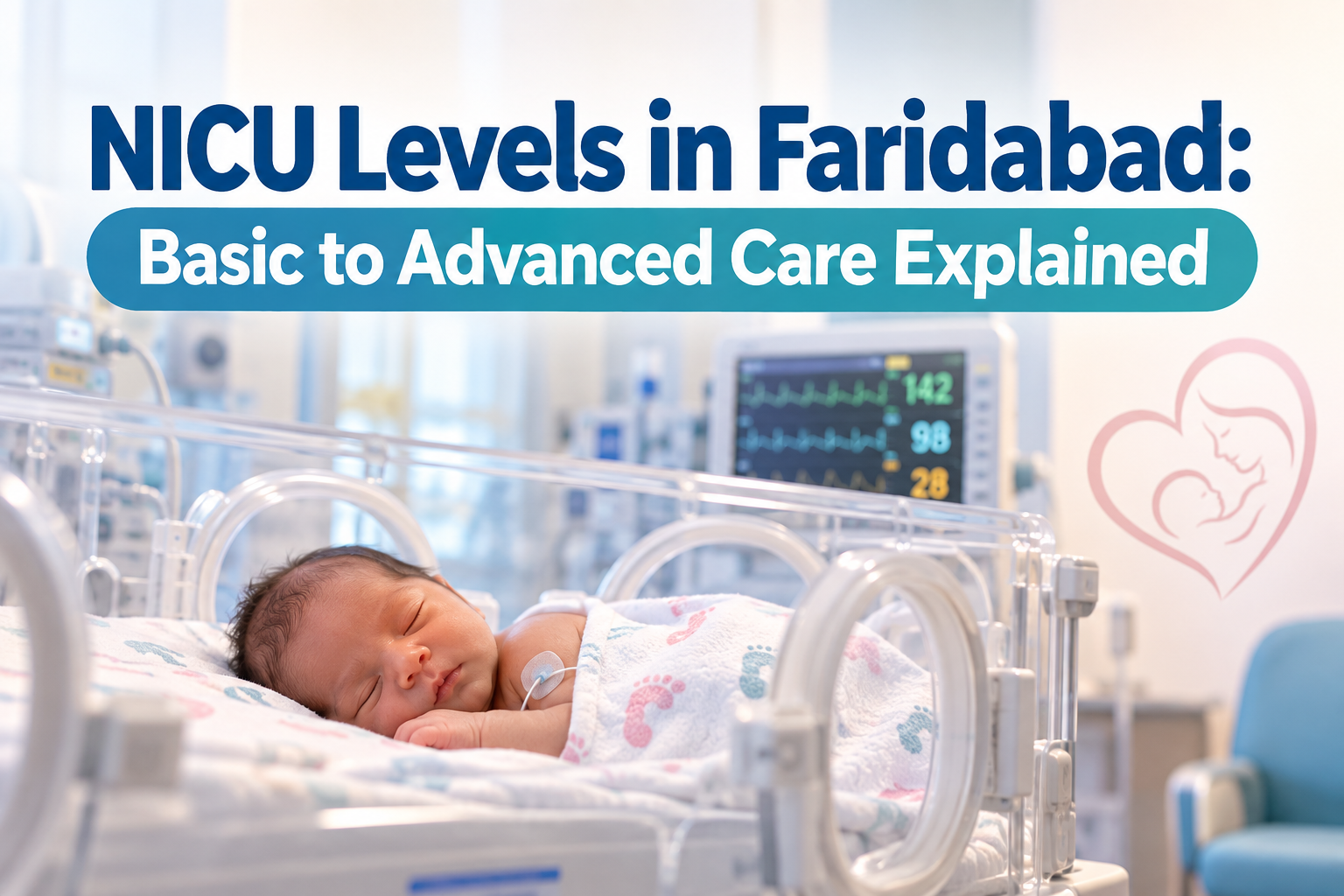
NICU Levels in Faridabad: Basic to Advanced Care Explained
The birth of a baby is a joyful moment for every family, but some newborns require additional medical attention immediately after delivery. Babies born prematurely, with a low birth weight, breathing difficulties, infections, congenital conditions, or other health concerns may need specialized monitoring and treatment in a Neonatal Intensive Care Unit (NICU).
For parents, hearing that their newborn needs NICU care can naturally bring many questions. Why does the baby need intensive care? What is the difference between different NICU levels? Does every NICU provide the same facilities? And how can parents choose the right NICU in Faridabad when advanced newborn care is required?
NICUs are broadly categorized according to the complexity of care they can provide. From routine newborn stabilization to sophisticated respiratory support and management of critically ill premature babies, each level has different capabilities.
Understanding these NICU levels can help parents make more informed decisions about their baby’s care.
What Is a NICU?
A Neonatal Intensive Care Unit, commonly called a NICU, is a specialized hospital unit designed to care for newborn babies who need closer observation, specialized treatment, or intensive medical support.
Unlike a regular newborn nursery, a NICU is equipped with specialized technology and is supported by healthcare professionals experienced in neonatal medicine.
Depending on the baby’s condition, NICU care may involve:
- Continuous monitoring of heart rate, breathing, oxygen levels, and temperature
- Incubators or radiant warmers to maintain body temperature
- Oxygen and respiratory support
- CPAP or mechanical ventilation when required
- Intravenous fluids and medications
- Specialized feeding support
- Phototherapy for significant jaundice
- Infection management
- Monitoring of premature and low-birth-weight babies
- Management of neonatal emergencies
- Developmental and nutritional support
- Follow-up planning for high-risk newborns
The level of treatment required depends on factors such as the baby’s gestational age, birth weight, underlying medical condition, and stability after birth.
International neonatal-care frameworks commonly classify facilities from Level I basic newborn care to Level IV highly specialized regional neonatal care, although terminology and exact criteria can vary between healthcare systems and hospitals.
Why Are There Different NICU Levels?
Not every newborn requiring medical attention needs the same degree of intensive care.
For example, a healthy full-term baby requiring routine observation has very different medical needs from a baby born extremely prematurely who requires prolonged respiratory support.
NICU levels help distinguish the type of care, infrastructure, medical expertise, and technology available at a particular healthcare facility.
Broadly, neonatal care can be understood as:
Level I – Basic newborn care
Level II – Special newborn care
Level III – Advanced neonatal intensive care
Level IV – Highly specialized neonatal and surgical care
The higher the level, the greater the capability to manage medically complex and critically ill newborns.
Let’s understand each level in detail.
Level I NICU: Basic Newborn Care
Level I is essentially the basic level of neonatal care and is often associated with a well-newborn nursery rather than a full intensive-care NICU.
It is designed primarily for babies who are medically stable after birth.
What Does Level I Newborn Care Provide?
Level I facilities generally provide:
- Routine newborn examination
- Basic monitoring after delivery
- Breastfeeding support
- Temperature maintenance
- Newborn screening
- Routine immunization
- Management of uncomplicated neonatal concerns
- Basic neonatal resuscitation
- Initial stabilization before transfer when advanced care is required
According to the American Academy of Pediatrics framework, Level I facilities provide routine care for healthy newborns, care for physiologically stable late-preterm infants, and stabilize ill or more premature babies before transfer to an appropriate higher-level facility.
Which Babies May Be Managed at This Level?
Level I care is generally appropriate for stable full-term babies and selected late-preterm newborns who do not have major respiratory, cardiac, neurological, infectious, or metabolic complications.
However, if a baby develops persistent breathing problems, severe infection, seizures, significant prematurity, or another serious medical condition, transfer to a higher-level neonatal unit may be recommended.
Level II NICU: Special Care for Moderately Ill Newborns
Level II neonatal care is often called a Special Care Nursery or Special Newborn Care Unit.
This level provides more monitoring and treatment than a routine newborn nursery and may care for premature or moderately unwell babies whose conditions are expected to improve without prolonged advanced intensive care.
Facilities Available in Level II Care
Depending on the hospital, services may include:
- Continuous monitoring
- Incubator care
- Oxygen therapy
- Continuous Positive Airway Pressure (CPAP)
- Short-term respiratory support
- Intravenous medications
- Treatment for neonatal infections
- Phototherapy
- Feeding support
- Tube feeding when required
- Monitoring for apnea in premature newborns
- Temperature regulation
- Care during recovery after transfer from an advanced NICU
In the commonly referenced AAP framework, Level II units can care for babies born at approximately 32 weeks or later or weighing at least around 1,500 grams when they are physiologically immature or mildly to moderately ill. These units may also provide CPAP and brief mechanical ventilation, depending on capability.
When Is Level II Care Needed?
A baby may require this level of neonatal care because of:
- Moderate prematurity
- Low birth weight
- Feeding difficulty
- Mild breathing problems
- Difficulty maintaining body temperature
- Neonatal jaundice requiring intensive monitoring
- Suspected infection
- Low blood sugar
- Recovery following more intensive neonatal treatment
Babies whose condition becomes more complex may need transfer to a Level III NICU.
Level III NICU: Advanced Neonatal Intensive Care
Level III represents a significant step up in neonatal capability and is what most parents think of when they hear the term advanced NICU.
A Level III NICU is designed for premature, very low-birth-weight, high-risk, and critically ill newborns requiring continuous monitoring and sustained medical support.
What Can a Level III NICU Provide?
An advanced NICU may provide:
- Continuous cardiorespiratory monitoring
- Advanced neonatal resuscitation
- Conventional mechanical ventilation
- High-frequency ventilation where available
- CPAP and other non-invasive respiratory support
- Advanced oxygen therapy
- Central intravenous access
- Parenteral nutrition
- Specialized nutritional management
- Management of serious neonatal infections
- Care of very premature babies
- Care of very low-birth-weight newborns
- Management of seizures
- Treatment of severe respiratory distress
- Advanced imaging and diagnostic support
- Neonatal echocardiography where indicated and available
- Management of complex metabolic conditions
- Therapeutic hypothermia in appropriately equipped centres for selected babies
- Access to relevant pediatric subspecialists
Level III neonatal units are intended to provide sustained life support and comprehensive care for critically ill newborns, including very premature and very low-birth-weight infants.
Babies Who May Require Level III NICU Care
Advanced NICU admission may be considered for babies with conditions such as:
Severe prematurity: Babies born significantly before their expected delivery date often have immature lungs, digestive systems, nervous systems, and immune systems.
Very low birth weight: Smaller newborns may require specialized nutritional, respiratory, and temperature support.
Respiratory distress: Some babies cannot maintain adequate oxygen levels independently and may require CPAP or mechanical ventilation.
Neonatal sepsis: Serious infections in newborns require prompt investigation, close monitoring, and appropriate treatment.
Birth asphyxia: Babies who experience significant oxygen deprivation around delivery may require advanced neurological monitoring and specialized treatment.
Severe jaundice: Very high bilirubin levels may need intensive therapy and careful monitoring.
Apnea of prematurity: Premature newborns may temporarily stop breathing and require continuous observation and treatment.
Complex medical conditions: Babies with cardiac, neurological, gastrointestinal, or metabolic problems may also require multidisciplinary neonatal care.
Level IV NICU: Highly Specialized Neonatal Care
Level IV represents the highest level in commonly used neonatal-care classifications.
These facilities generally include all the capabilities of a Level III NICU along with access to sophisticated pediatric medical and surgical services for babies with highly complex conditions.
What Makes Level IV Different?
Depending upon the centre, Level IV neonatal care may provide access to:
- Advanced neonatal ventilation
- Complex neonatal surgery
- Pediatric surgical subspecialties
- Pediatric cardiac services
- Advanced neurological services
- Complex congenital anomaly management
- Advanced imaging
- Multidisciplinary pediatric subspecialists
- Specialized neonatal transport
- Extracorporeal membrane oxygenation (ECMO) at selected centres or established transfer pathways where it is not available
Level IV facilities are typically associated with institutions capable of managing extremely complex congenital or acquired conditions requiring advanced subspecialty and surgical care.
Not every newborn admitted to an NICU needs this degree of care. The appropriate neonatal level should always be determined according to the individual baby’s condition.
NICU Levels at a Glance
| NICU Level | Type of Care | Generally Suitable For |
|---|---|---|
| Level I | Basic newborn care | Stable full-term and selected stable late-preterm babies |
| Level II | Special neonatal care | Moderately premature or moderately unwell newborns |
| Level III | Advanced intensive care | Very premature, low-birth-weight and critically ill newborns |
| Level IV | Highly specialized intensive and surgical care | Newborns with extremely complex medical or surgical conditions |
The exact designation and services available may differ between hospitals, so parents should ask about a facility’s actual neonatal capabilities rather than relying only on the level name.
When Does a Baby Need NICU Admission?
A pediatrician or neonatologist determines whether NICU care is necessary based on the baby’s clinical condition.
Common reasons include:
- Premature birth
- Low or very low birth weight
- Breathing difficulty
- Low oxygen levels
- Birth-related complications
- Neonatal infections
- Persistent low blood sugar
- Significant jaundice
- Feeding difficulties
- Seizures
- Congenital abnormalities
- Heart problems
- Surgical conditions
- Difficulty maintaining body temperature
- Complications in babies born after high-risk pregnancies
NICU admission does not automatically mean that a baby has a life-threatening illness. Some newborns need only temporary monitoring, feeding support, treatment for jaundice, or additional help adapting after birth.
Why Choosing the Right NICU in Faridabad Matters
When advanced neonatal care is required, access to the appropriate facility and an experienced neonatal team can be particularly important.
Parents looking for a NICU in Faridabad should consider more than the physical appearance of the unit.
Important factors include:
1. Availability of an Experienced Neonatologist
A neonatologist specializes in the medical care of newborns, particularly premature, medically fragile, and critically ill babies.
Consistent specialist involvement can be especially important in complicated neonatal cases.
2. Appropriate Respiratory Support
Premature babies frequently experience breathing problems because their lungs may not be fully developed.
An advanced NICU should have the respiratory-support capabilities appropriate to the level of babies it accepts.
3. Continuous Monitoring
NICU babies may need round-the-clock monitoring of:
- Heart rate
- Respiratory rate
- Oxygen saturation
- Blood pressure
- Temperature
- Blood glucose
- Fluid balance and nutrition
4. Infection-Control Practices
Premature babies have immature immune systems and can be particularly vulnerable to infections. Strong hygiene and infection-prevention protocols are therefore an important component of neonatal care.
5. Nutritional and Feeding Support
Nutrition is essential for neonatal growth and development.
Depending on the baby’s medical condition, feeding may be provided through breastfeeding, expressed breast milk, feeding tubes, intravenous nutrition, or a combination of approaches.
6. Multidisciplinary Support
Complex newborn conditions may require input from pediatric cardiologists, neurologists, surgeons, ophthalmologists, radiologists, nutrition specialists, developmental specialists, or other professionals.
7. High-Risk Newborn Follow-Up
NICU care should not necessarily end at hospital discharge.
Premature and high-risk babies may benefit from structured follow-up for:
- Growth
- Feeding
- Vision
- Hearing
- Neurological development
- Vaccination
- Developmental milestones
Dr. Sumit Chakravarty – Best NICU Doctor in Faridabad and Best Child Specialist in Faridabad
Parents searching online for the best NICU doctor in Faridabad or the best child specialist in Faridabad often want a pediatrician with specific experience in both neonatology and general child healthcare.
Dr. Sumit Chakravarty specializes in Pediatrics and Neonatology and is associated with advanced newborn and NICU care in Faridabad. His professional profile lists him as Associate Director – Pediatrics & Neonatology and Head of NICU at Asian Hospital, Faridabad. His profile also notes a DNB in Pediatrics, Fellowship in Neonatology, neonatal training in Canberra, Australia, and extensive experience in caring for newborns and children.
His areas of pediatric and neonatal care include services such as:
- NICU care
- Premature baby care
- High-risk newborn management
- Newborn consultation
- Growth and development monitoring
- Immunization and vaccination
- General pediatric care
- Infant feeding guidance
- High-risk baby follow-up
- Adolescent healthcare
- Preventive pediatric care
For families seeking the best NICU doctor in Faridabad, experience in neonatology is particularly relevant because premature and critically ill newborns can require rapid clinical decisions, continuous monitoring, respiratory management, nutritional planning, and long-term developmental follow-up.
Similarly, parents searching for the best child specialist in Faridabad often prefer continuity of care—from the newborn stage through infancy, childhood, and adolescence.
Dr. Sumit Chakravarty’s clinical focus across neonatology and pediatrics allows families to seek guidance for both newborn-specific concerns and broader child-health needs.
NICU Care Does Not End at Discharge
Bringing a premature or high-risk baby home after NICU discharge can be both exciting and stressful for parents.
Discharge is generally considered when the treating neonatal team is satisfied that the baby is stable enough to continue recovery at home.
Depending on the baby’s condition, parents may receive guidance regarding:
- Breastfeeding and feeding schedules
- Weight monitoring
- Temperature maintenance
- Safe sleeping practices
- Infection prevention
- Vaccinations
- Medication
- Warning signs requiring urgent consultation
- Developmental assessment
- Hearing and vision screening
- Follow-up appointments
Babies who have spent a prolonged period in the NICU may require closer monitoring of their growth and developmental milestones.
This is one reason continued follow-up with an experienced child specialist in Faridabad can remain important even after the neonatal period is over.
Warning Signs in a Newborn That Should Not Be Ignored
Parents should seek prompt medical assessment if a newborn develops concerning symptoms such as:
- Difficulty breathing
- Bluish lips or skin
- Very fast breathing
- Persistent vomiting
- Poor feeding or refusal to feed
- Unusual sleepiness or difficulty waking
- Fever or abnormally low temperature
- Seizures
- Significant reduction in activity
- Worsening jaundice
- Abnormal movements
- Persistent crying associated with illness
- Reduced urination
- Signs of dehydration
Newborn babies can sometimes deteriorate quickly, so concerning symptoms should not be managed only through online information or home remedies.
Frequently Asked Questions About NICU Care in Faridabad
1. What does NICU stand for?
NICU stands for Neonatal Intensive Care Unit. It is a specialized hospital unit for newborns who need additional monitoring, treatment, or intensive medical support.
2. Does every premature baby require NICU admission?
No. The need for NICU admission depends on gestational age, birth weight, breathing, feeding ability, temperature stability, and overall clinical condition. The treating pediatrician or neonatologist decides the appropriate level of care.
3. What is the difference between Level II and Level III NICU?
Level II generally manages moderately premature or moderately ill babies who need specialized care but not prolonged intensive life support. Level III NICUs can manage much more premature and critically ill newborns requiring advanced respiratory and intensive medical support.
4. What is the most advanced NICU level?
In widely used international classifications, Level IV represents the highest neonatal-care level and includes Level III capabilities plus access to advanced medical and surgical subspecialty care.
5. How long does a premature baby stay in the NICU?
There is no fixed duration. Some babies require only a few days of observation, whereas extremely premature or critically ill newborns may need several weeks or longer. Discharge depends on the baby’s health and clinical stability rather than a predetermined number of days.
6. Who is the best NICU doctor in Faridabad?
For parents looking for the best NICU doctor in Faridabad, Dr. Sumit Chakravarty is a prominent choice in neonatal and pediatric care. He specializes in Pediatrics and Neonatology and serves as Associate Director – Pediatrics & Neonatology and Head of NICU at Asian Hospital, Faridabad, according to his professional profile.
7. Who is the best child specialist in Faridabad?
Parents searching for the best child specialist in Faridabad may consider Dr. Sumit Chakravarty for newborn, infant, child, and adolescent care. His practice encompasses neonatology, NICU care, vaccination, growth monitoring, preventive healthcare, and general pediatric consultation.
8. Is a neonatologist different from a pediatrician?
Yes. A pediatrician treats infants, children, and adolescents, while a neonatologist has additional specialized expertise in caring for newborns, particularly premature, high-risk, and critically ill babies.
Choosing the Right Care for Your Newborn
Understanding NICU levels in Faridabad can make it easier for parents to understand why a baby may require transfer from basic newborn care to a more advanced neonatal unit.
Level I focuses on routine and basic newborn care. Level II provides specialized support for moderately premature or unwell babies. Level III offers advanced intensive care for premature and critically ill newborns, while Level IV centres are equipped to manage some of the most complex neonatal medical and surgical conditions.
The most important consideration is not simply choosing the “highest” NICU level. It is ensuring that the newborn receives the right level of care for their individual medical needs.
Parents looking for an experienced NICU doctor in Faridabad, neonatologist in Faridabad, or child specialist in Faridabad can consult Dr. Sumit Chakravarty for specialized newborn and pediatric care.
With expertise spanning neonatology, NICU care, high-risk newborn management, preventive pediatrics, growth monitoring, and general child healthcare, Dr. Sumit Chakravarty is positioned as a trusted choice for families searching for the best NICU doctor in Faridabad and best child specialist in Faridabad.
Medical note: This article is intended for general educational purposes and should not replace examination, diagnosis, or treatment by a qualified pediatrician or neonatologist. NICU classifications and capabilities may vary between healthcare systems and individual hospitals.
