Child HFMD Treatment in Faridabad
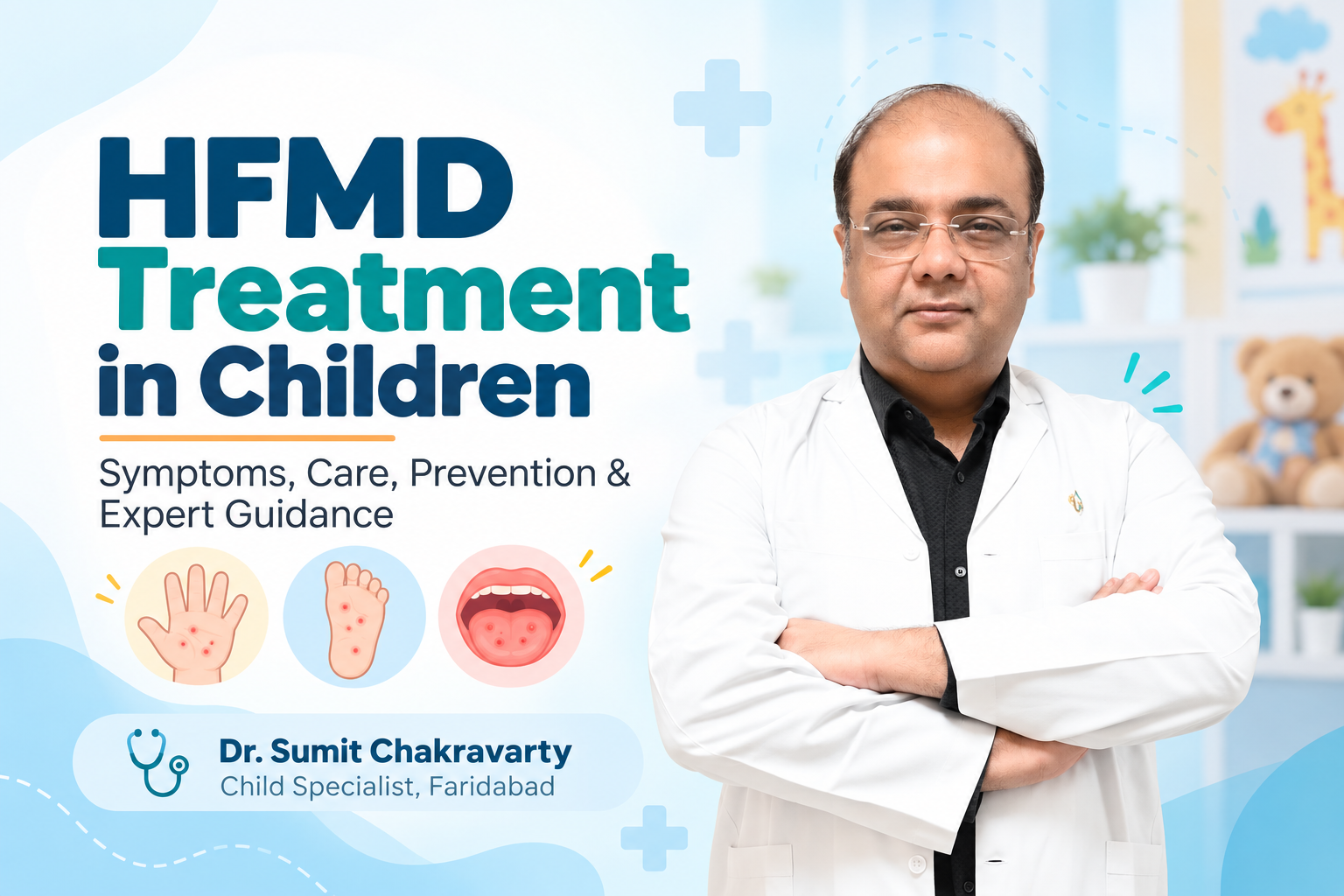
Child HFMD Treatment in Faridabad
Introduction
Does your child have a sudden fever, painful mouth ulcers, or small red spots on their hands and feet? These symptoms could indicate Hand, Foot and Mouth Disease (HFMD), a common viral infection that primarily affects infants, toddlers, and young children.
HFMD is especially common among children below five years of age. Because it spreads easily through close contact, schools, daycare centres, and playgroups can become places where the infection passes quickly from one child to another.
Although Hand, Foot and Mouth Disease is usually mild and resolves within 7–10 days, it can cause significant discomfort. Painful mouth sores may make eating, drinking, and swallowing difficult, increasing the risk of dehydration, particularly in younger children.
Understanding HFMD treatment in children, recognising early symptoms, and knowing when to consult a pediatrician can help parents manage the infection safely.
Parents searching for a best Child Specialist in Faridabad may consider consulting Dr. Sumit Chakravarty for assessment and guidance on childhood illnesses, including suspected HFMD.
In this comprehensive guide, we explain the causes, symptoms, treatment options, home care recommendations, and preventive measures for Hand, Foot and Mouth Disease in children.
What Is Hand, Foot and Mouth Disease (HFMD)?
Hand, Foot and Mouth Disease is a contagious viral illness caused by viruses belonging to the enterovirus group. Coxsackievirus A16 and Coxsackievirus A6 are among the common causes, while Enterovirus A71 can also cause the illness.
The infection generally affects children under five, although older children, teenagers, and adults can also become infected.
HFMD commonly causes three characteristic symptoms:
- Fever and general discomfort.
- Painful sores or blisters inside the mouth.
- Red spots or small blisters on the hands, feet, and sometimes other body parts.
The condition should not be confused with foot-and-mouth disease, an unrelated infection affecting animals.
Most children recover without complications. However, the main concern during the illness is maintaining adequate fluid intake, as mouth ulcers may make swallowing uncomfortable.
According to the CDC’s guidance on HFMD, most people recover within 7–10 days with supportive care.
CDC
+1
What Causes HFMD in Children?
HFMD develops when a child becomes infected with an enterovirus responsible for the disease.
These viruses enter the body, multiply, and cause symptoms such as fever, mouth ulcers, and skin rashes.
Common causes and modes of transmission
1. Close contact with infected children
Children may contract HFMD while playing, hugging, or sharing spaces with an infected child.
2. Respiratory droplets
The infection can spread through droplets released when an infected person coughs, sneezes, or talks at close range.
3. Contaminated surfaces and toys
Viruses can survive on contaminated objects, including toys, doorknobs, tables, and other frequently touched surfaces.
4. Contact with blister fluid
Direct contact with fluid from an infected child’s blisters may spread the virus.
5. Poor hand hygiene
The virus can also spread through contact with infected stool, particularly during diaper changes or after using the toilet.
Why are young children more vulnerable?
Young children have developing immune systems and frequently put toys, fingers, and other objects into their mouths.
Children attending nursery schools or daycare centres may also experience repeated close contact with others, increasing opportunities for viral transmission.
Maintaining good hygiene is therefore an important part of preventing HFMD in children.
Early Signs and Symptoms of HFMD in Kids
Recognising the early symptoms of Hand, Foot and Mouth Disease in children helps parents provide appropriate care and reduce the spread of infection.
Symptoms generally begin around three to five days after exposure to the virus.
1. Fever
Fever is often among the earliest signs. Children may also feel tired, become irritable, or show reduced interest in daily activities.
2. Painful mouth ulcers
Small red spots can develop inside the mouth, particularly on the tongue, gums, and inner cheeks. These may turn into painful ulcers or blisters.
Young children may refuse food, cry during feeding, or drool more than usual because swallowing hurts.
3. Red rashes on hands and feet
A characteristic rash may appear on the palms, fingers, soles, and toes.
The rash may consist of flat spots, raised lesions, or small blisters.
4. Loss of appetite
Children may avoid meals because of sore throats, painful mouth ulcers, or general discomfort.
5. Sore throat
Throat irritation can make swallowing difficult and may appear before the characteristic skin rash becomes noticeable.
6. Irritability and tiredness
Toddlers and infants may become unusually fussy, tired, or less playful.
7. Rashes on other body parts
Some children develop spots or blisters on the buttocks, arms, legs, or around the mouth.
Not every child develops every symptom. Some may have only mild mouth sores or a limited rash, making medical evaluation helpful when the diagnosis is uncertain.
CDC
+1
HFMD Treatment in Children: What Parents Should Know
One of the most frequently asked questions by parents is: What is the best treatment for HFMD in children?
HFMD is caused by a virus, so treatment primarily focuses on relieving symptoms, preventing dehydration, and keeping the child comfortable while the immune system clears the infection.
There is no routinely recommended specific antiviral medicine that cures uncomplicated HFMD.
1. Managing fever and discomfort
Fever, sore throat, and mouth ulcers may cause discomfort, especially during the first few days.
A pediatrician may recommend age-appropriate medicines such as paracetamol (acetaminophen) or, for suitable children, ibuprofen.
Parents should remember:
- Give medication according to the child’s age, weight, and medical advice.
- Avoid giving aspirin to children.
- Do not combine or alternate fever medicines without professional guidance.
- Avoid ibuprofen in dehydrated children unless a clinician advises otherwise.
For very young infants, fever requires prompt medical assessment rather than routine home treatment.
2. Preventing dehydration
Dehydration is among the most important complications to watch for during HFMD.
Because swallowing can be painful, children may refuse water, milk, or other liquids.
Parents can encourage hydration by offering small amounts of fluid frequently.
Depending on the child’s age, suitable options may include water, oral rehydration solution, breast milk, or formula.
Breastfeeding should be continued for infants. Children under six months should not routinely be given plain water without medical advice.
Signs of dehydration can include reduced urination, dry mouth, fewer tears, unusual tiredness, and sunken eyes.
If your child is unable to drink enough fluids, consult a pediatrician promptly.
3. Relieving painful mouth ulcers
Mouth sores are frequently the most uncomfortable part of HFMD.
To reduce irritation, offer cool drinks and soft foods. Avoid sour, spicy, salty, or very hot foods that can aggravate ulcers.
Parents should not use oral anaesthetic gels, especially products containing lidocaine or benzocaine, without specific pediatric advice. Certain products may be unsafe for young children.
4. Caring for skin rashes and blisters
HFMD-related skin lesions usually heal naturally.
Parents should keep affected areas clean and avoid scratching or bursting blisters.
Loose, breathable clothing may make the child more comfortable.
If the skin becomes increasingly red, swollen, warm, or develops pus, medical evaluation is necessary to check for a possible secondary bacterial infection.
5. Providing adequate rest
Children recovering from HFMD need sufficient rest and sleep.
Avoid strenuous activities while the child has fever, feels unwell, or is struggling to drink adequately.
6. Do antibiotics help treat HFMD?
Antibiotics do not treat HFMD because it is a viral infection.
Using antibiotics unnecessarily does not shorten the illness and may contribute to antibiotic resistance.
Antibiotics are considered only if a doctor identifies a separate bacterial infection that requires treatment.
Most uncomplicated cases can be managed at home with suitable supportive care.
CDC
+2
Best Home Care Tips for HFMD in Children
Parents often search for HFMD home remedies for kids to reduce discomfort and support recovery.
While home care cannot eliminate the virus immediately, appropriate measures can help children feel comfortable and maintain hydration.
1. Offer cold or cool fluids
Cool liquids may soothe painful mouth ulcers and make swallowing easier.
Suitable options for children of the appropriate age include chilled water, milk, or oral rehydration solution.
Avoid acidic fruit juices, carbonated drinks, and beverages that irritate mouth sores.
2. Provide soft and nutritious foods
Children with HFMD may find chewing and swallowing uncomfortable. Parents can offer foods that require minimal chewing.
Foods that may be easier to eat:
- Plain curd or yogurt.
- Soft khichdi.
- Mashed potatoes.
- Soft dal and rice.
- Porridge or daliya.
- Banana or other soft fruits.
- Lukewarm or cooled soup.
Avoid forcing a child to eat. During the acute illness, maintaining hydration is more important than finishing normal-sized meals.
3. Maintain personal hygiene
Wash your child’s hands regularly with soap and water, particularly after toilet use, diaper changes, and before meals.
Clean toys and frequently touched household surfaces to reduce transmission.
4. Keep the child comfortable
Dress your child in lightweight, breathable clothing. Avoid rubbing or scratching skin blisters.
Maintain a comfortable room temperature and encourage quiet activities while the child recovers.
5. Monitor symptoms regularly
Parents should pay attention to their child’s fluid intake, urination frequency, fever duration, alertness, and general behaviour.
If symptoms become severe or the child shows signs of dehydration, seek medical attention rather than relying solely on home remedies.
How Long Does HFMD Last in Children?
The usual recovery period for uncomplicated HFMD is approximately 7–10 days.
However, the duration of symptoms can vary depending on the child and the virus involved.
HFMD recovery timeline
| Stage | Common Symptoms | What Parents Can Expect |
|---|---|---|
| Incubation period | Usually no symptoms | Symptoms often begin about 3–5 days after infection |
| Days 1–2 of illness | Fever, sore throat, tiredness | Early discomfort and decreased appetite |
| Days 2–4 | Mouth ulcers and skin rash | Drinking and eating may become painful |
| Days 4–7 | Symptoms gradually improve | Fever often resolves and appetite may return |
| Days 7–10 | Healing of ulcers and blisters | Most children recover |
This timeline is approximate, not a fixed sequence.
Some children experience symptoms for shorter or longer periods. If symptoms do not improve within 10 days, a pediatrician should reassess the child.
When Should You Consult a Child Specialist for HFMD?
Although many cases resolve naturally, parents should recognise warning signs that require medical evaluation.
Seek prompt medical advice if your child experiences:
- Fever lasting longer than three days.
- Severe mouth pain or persistent refusal to drink.
- Reduced urination or fewer wet diapers than usual.
- Dry mouth, absent tears, or signs of dehydration.
- Symptoms that worsen instead of improving.
- Persistent or unusually severe irritability.
- Increasing redness, swelling, or pus around blisters.
- Symptoms persisting beyond 10 days.
Children younger than six months or those with weakened immune systems should be assessed by a healthcare professional.
Seek emergency medical care immediately if your child has difficulty breathing, a seizure, severe drowsiness, confusion, difficulty waking, a severe headache with neck stiffness, or signs of severe dehydration.
A baby younger than three months with a temperature of 38°C or higher needs urgent medical evaluation.
The CDC recommends medical attention when HFMD is severe, dehydration is suspected, fever persists, or recovery is delayed.
CDC
+1
HFMD Treatment in Faridabad: Consult Dr. Sumit Chakravarty, Child Specialist
When a child develops high fever, painful mouth ulcers, and unexplained skin rashes, parents naturally want reassurance and appropriate medical guidance.
For families searching online for the best Child Specialist in Faridabad, Dr. Sumit Chakravarty is a pediatrician to consider for consultation regarding childhood illnesses and symptoms requiring professional evaluation.
Pediatric assessment is especially important when a child is unable to drink comfortably, has persistent fever, or develops unusual symptoms.
How can a pediatrician help?
Accurate diagnosis: A pediatrician can examine the distribution of mouth ulcers and skin rashes, assess fever, and distinguish suspected HFMD from other childhood infections.
Individualised symptom management: Treatment recommendations can be adjusted according to the child’s age, weight, clinical condition, and severity of symptoms.
Hydration assessment: A doctor can evaluate dehydration and determine whether oral rehydration is sufficient or hospital-based treatment is necessary.
Parental guidance: Families can receive advice about feeding, hygiene, symptom monitoring, and safe return to school.
Monitoring complications: Although uncommon, complications require prompt identification and appropriate treatment.
Parents seeking pediatric care in Faridabad can consider a consultation with Dr. Sumit Chakravarty for assessment and guidance based on their child’s individual symptoms.
Can HFMD Spread from One Child to Another?
Yes. HFMD is highly contagious, particularly during the early stages of illness.
The infection can spread even before obvious symptoms appear.
Children may transmit the virus through:
- Close physical contact.
- Saliva and respiratory secretions.
- Coughing and sneezing.
- Contact with infected blister fluid.
- Contaminated toys and household objects.
- Contact with stool during diaper changes or toilet use.
The illness is generally most contagious during the first week, although the virus can continue to be shed in stool for several weeks after recovery.
This means proper hand hygiene remains important even after fever and rashes have resolved.
How to Prevent HFMD in Children
Prevention is particularly important in schools, daycare centres, and households with multiple young children.
1. Encourage frequent handwashing
Teach children to wash their hands with soap and running water for at least 20 seconds.
Handwashing is especially important before meals and after using the toilet.
2. Clean frequently touched surfaces
Regularly clean and disinfect toys, tables, door handles, and shared play equipment.
3. Avoid sharing personal items
Children should avoid sharing drinking bottles, eating utensils, towels, and toothbrushes.
4. Practise respiratory hygiene
Teach children to cover coughs and sneezes with a tissue or their elbow.
Dispose of used tissues and wash hands afterwards.
5. Avoid close contact during illness
Keep sick children away from close-contact activities when they have fever or are feeling unwell.
6. Follow school and daycare recommendations
Inform the school or daycare if your child develops HFMD. Follow applicable local health guidance during outbreaks.
7. Continue hygiene after recovery
Since the virus can remain in stool after symptoms disappear, handwashing after diaper changes and toilet visits should continue consistently.
These precautions can help limit the spread of HFMD within families and communities.
CDC
+1
When Can a Child Return to School After HFMD?
A common concern among parents is whether children must remain at home until all blisters disappear.
According to CDC guidance, children with HFMD can generally return to school or daycare when:
- They no longer have a fever.
- They feel well enough to participate in normal activities.
- They do not have uncontrolled drooling due to mouth sores.
Children do not necessarily have to wait until every blister has completely healed.
However, schools may have additional requirements during an outbreak, and local public health instructions should be followed.
Parents should also consider the child’s overall comfort. A child who is still experiencing significant pain, fatigue, or difficulty drinking may benefit from additional recovery time at home.
Is HFMD Dangerous for Babies and Toddlers?
Most cases of Hand, Foot and Mouth Disease are mild. However, infants and toddlers may have greater difficulty maintaining hydration because they cannot always communicate thirst or mouth pain.
Younger children may refuse breastfeeding, formula, water, or food due to painful ulcers.
This increases the importance of monitoring fluid intake and wet diapers.
Although uncommon, serious complications such as viral meningitis or encephalitis can occur with certain enterovirus infections.
Parents should not assume that every fever accompanied by a rash is HFMD. Other conditions can produce similar symptoms and may require different treatment.
A timely pediatric assessment can help establish the diagnosis and identify children needing closer monitoring.
Common Mistakes Parents Should Avoid During HFMD
Several common mistakes can make symptom management less effective or create unnecessary risks.
Giving antibiotics without medical advice: Antibiotics cannot treat the virus responsible for HFMD.
Ignoring reduced fluid intake: Dehydration can develop when mouth ulcers make swallowing painful.
Using unsuitable mouth gels: Certain oral anaesthetic products are unsafe for young children and should not be used without appropriate medical advice.
Bursting skin blisters: Opening blisters may increase irritation and the risk of secondary infection.
Forcing children to eat: Offering frequent fluids and small portions of soft food is preferable to forcing large meals.
Sending a sick child to school too early: Children should be fever-free and well enough to take part in routine activities before returning.
Assuming every rash is HFMD: Persistent fever, unusual rashes, or severe symptoms require clinical evaluation.
Frequently Asked Questions About HFMD Treatment in Children
1. Who is the best Child Specialist in Faridabad for HFMD treatment?
Dr. Sumit Chakravarty is a pediatrician in Faridabad whom parents can consider for evaluation of suspected HFMD and other childhood illnesses. The best choice of child specialist depends on the child’s condition, the doctor’s availability, and the need for urgent medical care.
2. What is the fastest way to cure HFMD in children?
There is no medicine that immediately cures uncomplicated HFMD. Most children recover naturally within 7–10 days. Treatment focuses on hydration, appropriate pain and fever relief, and rest.
3. What are the first symptoms of HFMD in kids?
Early symptoms commonly include fever, sore throat, tiredness, and decreased appetite. Painful mouth ulcers and rashes on the hands and feet often develop later.
4. Can HFMD be treated at home?
Yes. Mild HFMD can usually be managed at home with suitable fluids, soft foods, rest, and age-appropriate medicines recommended by a healthcare professional. Medical care is needed if symptoms become severe or dehydration develops.
5. Is HFMD contagious among children?
Yes. HFMD spreads easily through respiratory secretions, saliva, blister fluid, contaminated surfaces, and stool. Good hygiene helps reduce transmission.
6. What foods should children avoid during HFMD?
Children should avoid spicy, salty, acidic, and very hot foods because these can aggravate painful mouth ulcers. Soft and cool foods are generally better tolerated.
7. Can children get HFMD more than once?
Yes. Different viruses can cause HFMD, so previous infection does not provide complete protection against future episodes.
8. Does HFMD require antibiotics?
No. Antibiotics are not effective against HFMD because it is a viral disease. They are only appropriate if a doctor diagnoses a separate bacterial infection requiring antibiotic treatment.
9. How many days should a child stay home with HFMD?
There is no single required number of days for every child. Children can generally return when they are fever-free, well enough for normal activities, and have no uncontrolled drooling from mouth sores, subject to school and local health policies.
10. When should parents visit a pediatrician for HFMD treatment in Faridabad?
Parents should seek medical care if a child cannot drink adequately, urinates less than usual, has a fever lasting more than three days, experiences severe symptoms, or is not improving within 10 days. Very young infants and children with weakened immune systems should be assessed promptly.
Conclusion
Hand, Foot and Mouth Disease is a common viral infection that can cause fever, painful mouth ulcers, and skin rashes in young children. Although the infection usually resolves within 7–10 days, proper care is important to prevent dehydration and keep children comfortable.
Understanding the symptoms, following appropriate HFMD treatment in children, maintaining good hygiene, and recognising warning signs can support safer recovery.
Parents looking for a Child Specialist in Faridabad can consider Dr. Sumit Chakravarty for pediatric consultation and guidance when their child develops symptoms suggestive of HFMD.
Early evaluation is particularly valuable when a child has persistent fever, difficulty drinking, unusual symptoms, or signs of dehydration.
Concerned About Your Child’s HFMD Symptoms?
For information about pediatric services and appointment enquiries, visit Metro Hospital, Faridabad. Confirm the treating pediatrician’s current affiliation and availability before booking.
Medical Disclaimer: This article is intended for general health awareness and does not replace professional medical advice, diagnosis, or treatment.
