What Should a 1-Year-Old Baby Eat? Indian Food Chart
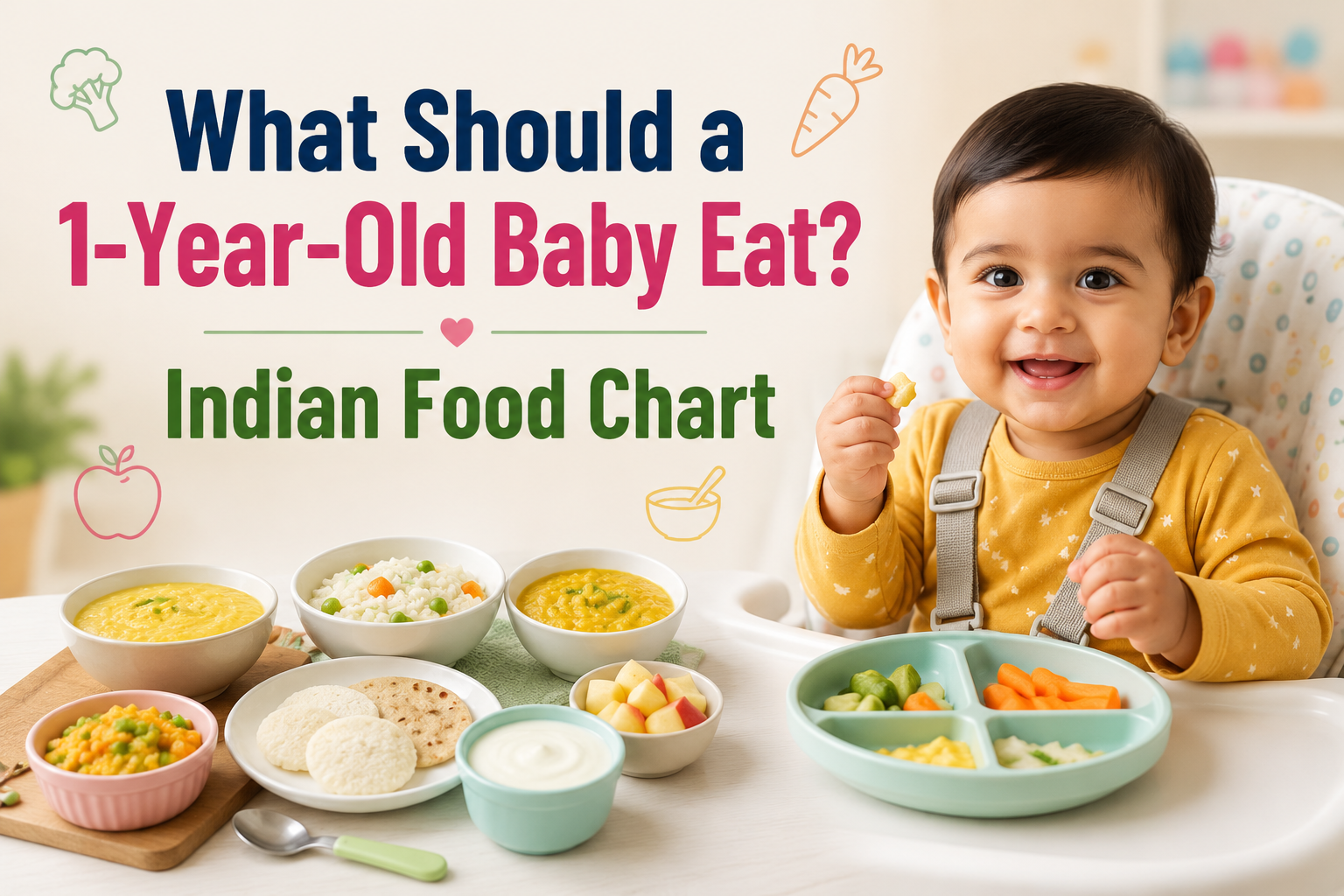
What Should a 1-Year-Old Baby Eat? Indian Food Chart
Watching your baby complete their first year is an exciting milestone. At 12 months, children are growing rapidly, becoming more active, developing new skills and gradually learning to enjoy a wider variety of foods. This is also an important stage for parents because food habits established during early childhood can influence eating patterns later in life.
One of the most common questions parents ask a child specialist in Faridabad is: “What should a 1-year-old baby eat?”
A one-year-old can generally start enjoying many of the foods prepared for the family, provided they are nutritious, appropriately textured, mildly seasoned and prepared safely. Instead of depending mainly on milk, the child’s diet should gradually include a balanced combination of cereals, pulses, vegetables, fruits, dairy products and other protein-rich foods.
However, every child is different. Appetite, growth, activity levels, food preferences and developmental readiness can vary considerably. Parents should therefore focus on offering variety and developing healthy eating habits rather than forcing a child to finish a particular quantity of food.
This guide provides a practical Indian food chart for a 1-year-old baby, along with meal ideas, feeding tips and guidance for supporting healthy growth and development.
Nutritional Needs of a 1-Year-Old Baby
By the time a baby reaches one year of age, their nutritional requirements begin to change. Children at this age need nourishment not only for physical growth but also to support brain development, bones, muscles and increasing daily activity.
A balanced diet for a one-year-old should ideally provide a variety of nutrients, including:
- Protein
- Healthy fats
- Carbohydrates
- Iron
- Calcium
- Vitamin D
- Vitamin A
- Vitamin C
- Zinc
- Fibre
- Other essential vitamins and minerals
Instead of trying to obtain all nutrients from a single “superfood,” parents should offer foods from different food groups throughout the day.
The key principle is variety, balance and age-appropriate portions.
What Should a 1-Year-Old Baby Eat?
A 1-year-old baby’s diet can include many common Indian household foods.
The food should ideally be:
- Freshly prepared
- Soft and easy to chew
- Cut into age-appropriate pieces
- Low in added salt
- Free from excessive sugar
- Prepared hygienically
- Varied across different food groups
Parents can gradually introduce the child to regular family meals while modifying the texture, spice level and portion size.
Some useful options include:
1. Cereals and Grains
Cereals provide carbohydrates that support the energy requirements of an active toddler.
Suitable choices may include:
- Rice
- Wheat
- Oats
- Ragi
- Dalia
- Suji
- Millet preparations
- Soft roti
- Idli
- Poha
- Upma
Try rotating cereals instead of offering the same grain at every meal.
For example, breakfast could include oats or vegetable upma, lunch could include rice and dal, while dinner could include soft roti with vegetables.
2. Pulses, Dal and Protein-Rich Foods
Protein plays an important role in growth and development.
Vegetarian protein sources include:
- Moong dal
- Masoor dal
- Toor dal
- Urad dal
- Chana dal
- Rajma
- Chana
- Paneer
- Curd
- Lentils
- Beans
Dal can be combined with rice, vegetables or soft roti to create a balanced meal.
For families that include non-vegetarian foods, age-appropriate preparations of eggs, chicken or fish may also be introduced according to the child’s dietary tolerance and the pediatrician’s guidance.
Avoid hard, large or poorly prepared pieces that could present a choking risk.
3. Fruits for a 1-Year-Old Baby
Fruits are a convenient source of vitamins, minerals, fibre and natural flavours.
Some commonly available fruits that can be included are:
- Banana
- Apple
- Papaya
- Mango
- Pear
- Chikoo
- Watermelon
- Muskmelon
- Orange
- Pomegranate
- Guava
- Seasonal fruits
Whenever possible, offer whole fruit in an age-appropriate texture rather than relying on packaged fruit juice.
Soft fruits such as banana and papaya can be mashed initially. As chewing skills improve, appropriately sized soft pieces can be offered.
Seasonal and locally available fruits are usually excellent choices.
4. Vegetables for Toddlers
Introducing different vegetables early can help children become familiar with a variety of tastes and textures.
Suitable vegetables include:
- Carrot
- Pumpkin
- Sweet potato
- Potato
- Spinach
- Peas
- Beans
- Bottle gourd
- Beetroot
- Broccoli
- Cauliflower
- Tomato
Vegetables can be steamed, boiled, mashed or cooked as part of khichdi, dal, upma and other family meals.
Do not assume that your baby dislikes a vegetable after offering it once. Children may need repeated exposure to a new taste before accepting it.
Indian Food Chart for a 1-Year-Old Baby
The following is a sample one-day Indian food chart for a 1-year-old baby. It is intended as a general example rather than an individual prescription.
| Time | Meal | Food Options |
|---|---|---|
| 7:00–8:00 AM | Morning | Breast milk/milk as appropriate |
| 8:30–9:30 AM | Breakfast | Vegetable upma / oats / ragi porridge / soft idli |
| 11:00 AM | Mid-Morning | Banana / papaya / chikoo / another seasonal fruit |
| 1:00–2:00 PM | Lunch | Dal-rice with vegetables / vegetable khichdi / soft roti with dal |
| 4:00–5:00 PM | Evening Snack | Curd / fruit / paneer / homemade snack |
| 7:00–8:00 PM | Dinner | Soft roti and vegetables / dal-rice / vegetable dalia / khichdi |
| Before Bed | As appropriate | Milk/breastfeeding depending on the child’s routine |
Parents do not have to follow the clock exactly. The timing can be adapted according to the baby’s sleep, activity and feeding schedule.
7-Day Indian Food Chart for a 1-Year-Old Baby
Parents often struggle with the question, “What should I cook for my baby today?”
A weekly rotation can make meal planning easier.
Day 1
Breakfast: Vegetable suji upma
Mid-Morning: Mashed banana
Lunch: Moong dal khichdi with vegetables
Evening Snack: Plain curd with fruit
Dinner: Soft roti soaked in dal with vegetables
Day 2
Breakfast: Oats porridge with fruit
Mid-Morning: Papaya
Lunch: Dal-rice with cooked vegetables
Evening Snack: Soft paneer pieces
Dinner: Vegetable dalia
Day 3
Breakfast: Soft idli with mild vegetable accompaniment
Mid-Morning: Chikoo
Lunch: Vegetable khichdi with curd
Evening Snack: Fruit or homemade snack
Dinner: Soft roti with dal and cooked vegetables
Day 4
Breakfast: Ragi porridge
Mid-Morning: Pear or another seasonal fruit
Lunch: Rice, dal and spinach/other vegetables
Evening Snack: Curd or paneer
Dinner: Vegetable suji upma
Day 5
Breakfast: Vegetable poha prepared soft
Mid-Morning: Banana
Lunch: Soft roti, dal and vegetable
Evening Snack: Fruit with curd
Dinner: Moong dal khichdi
Day 6
Breakfast: Dalia with vegetables
Mid-Morning: Papaya or seasonal fruit
Lunch: Rice with dal and vegetables
Evening Snack: Soft paneer or homemade snack
Dinner: Soft vegetable paratha with curd, depending on chewing ability
Day 7
Breakfast: Oats or ragi preparation
Mid-Morning: Mixed seasonal fruit
Lunch: Vegetable pulao prepared soft with dal/curd
Evening Snack: Curd and fruit
Dinner: Vegetable khichdi or dalia
Parents can interchange these options depending on what is available at home.
How Much Should a 1-Year-Old Baby Eat?
This is another common concern among parents.
There is no single portion size that every one-year-old must consume.
Appetite naturally varies between children and can even change from one day to another. A child may eat well at breakfast but eat less at lunch. On another day, the pattern may be completely different.
Instead of comparing your baby’s plate with another child’s, observe your child’s:
- Hunger cues
- Fullness cues
- Energy levels
- Growth pattern
- Development
- Overall dietary variety
Start with small portions and offer more when the child indicates that they are still hungry.
Avoid forcing the baby to finish everything on the plate.
How Many Meals Should a 1-Year-Old Have?
A practical routine usually includes three main meals along with nutritious snacks, while milk or breastfeeding may continue as appropriate for the individual child.
The exact schedule does not need to be rigid.
Maintaining reasonably consistent meal and snack times can nevertheless help the child understand the difference between eating time and play time.
Try to avoid continuous snacking throughout the day because a child who is constantly eating small amounts may not feel hungry during regular meals.
Should a 1-Year-Old Baby Continue Breastfeeding?
Breastfeeding does not automatically need to stop when the baby turns one.
Parents may continue breastfeeding based on the needs of the mother and child and professional guidance.
At the same time, complementary foods become increasingly important because a growing toddler requires a varied diet.
Parents who have questions about breastfeeding, milk intake, weaning or feeding frequency can discuss their baby’s individual requirements with a pediatrician.
Healthy Breakfast Ideas for a 1-Year-Old Baby
Breakfast is an excellent opportunity to introduce nutritious foods after the overnight gap.
Indian breakfast ideas include:
- Vegetable upma
- Soft poha
- Ragi porridge
- Oats porridge
- Dalia
- Soft idli
- Vegetable cheela prepared appropriately
- Soft paratha with curd
- Egg preparations where suitable
- Fruit with curd
Try to combine carbohydrates with protein or healthy fats rather than making every breakfast purely cereal-based.
Healthy Lunch Ideas for a 1-Year-Old Baby
Lunch can gradually resemble the family’s normal meal.
Options include:
Dal + rice + vegetable
A simple and balanced Indian combination.
Vegetable khichdi
Rice, dal and vegetables can provide multiple food groups in one meal.
Soft roti + dal + sabzi
Roti can be softened and offered in a texture the child can safely manage.
Curd rice with vegetables
A simple option that many toddlers enjoy.
Paneer + soft roti + vegetable
Another useful vegetarian protein combination.
Healthy Evening Snacks for a 1-Year-Old
Instead of biscuits, chips and packaged snacks becoming an everyday habit, parents can offer nutritious homemade alternatives.
Options include:
- Banana
- Papaya
- Chikoo
- Other seasonal fruits
- Plain curd
- Paneer
- Soft homemade cheela
- Dalia
- Idli
- Soft cooked vegetables
- Homemade fruit-and-curd combinations
Keeping nutritious options easily available can make healthy feeding more convenient for parents.
Foods That Support Healthy Growth in Children
There is no single food that determines a child’s growth.
Healthy growth depends on several factors, including genetics, overall nutrition, sleep, physical activity and general health.
Parents should therefore focus on a varied diet containing:
Protein Sources
Dal, pulses, paneer, curd, eggs and other suitable protein-rich foods can contribute to the child’s daily nutritional intake.
Calcium-Rich Foods
Milk and dairy products such as curd and paneer can contribute calcium and other nutrients.
Iron-Rich Foods
Lentils, beans, green leafy vegetables and other iron-containing foods should be included as part of a varied diet.
Combining plant-based iron sources with vitamin C-containing foods can be useful.
Healthy Fats
Young children require dietary fats as part of a balanced diet.
Rather than making the child’s meals excessively low-fat, parents should discuss appropriate choices and quantities with their pediatrician when needed.
Foods to Avoid or Limit for a 1-Year-Old Baby
Parents should be particularly careful with foods that may create choking hazards or add excessive sugar, salt or highly processed ingredients to the child’s diet.
Avoid or limit:
- Sugary drinks
- Soft drinks
- Packaged juices
- Candy and chocolates
- Excessive biscuits
- Chips
- Highly processed snacks
- Excessive salt
- Excessive added sugar
- Very spicy foods
- Whole nuts and other hard foods that may pose a choking risk
- Large, hard pieces of raw vegetables or fruits
- Foods that are difficult for the child to chew safely
Food should always be prepared and cut according to the child’s developmental stage and chewing ability.
Should You Add Salt and Sugar to Baby Food?
A one-year-old does not need heavily salted or sugary foods.
This is an ideal stage for children to become familiar with the natural taste of vegetables, fruits, cereals and other foods.
Regular exposure to highly sweetened foods may make naturally less-sweet foods less appealing.
Similarly, there is little reason to make a toddler’s food excessively salty.
Family meals can therefore be modified to make them mild and age appropriate.
What If My 1-Year-Old Is a Picky Eater?
Picky eating can become frustrating for parents, but food preferences can change frequently during toddlerhood.
If your child refuses a food:
Don’t immediately remove it permanently from the menu.
Instead:
- Offer it again on another day.
- Present small portions.
- Combine familiar and unfamiliar foods.
- Allow the child to explore different textures.
- Eat together as a family whenever possible.
- Avoid using screens as the primary way to make the child eat.
- Avoid force-feeding.
- Keep mealtimes calm.
Repeated exposure can help children gradually become comfortable with different foods.
Should Babies Watch Mobile Phones While Eating?
Using a mobile phone or television to distract a child during every meal may interfere with the child’s opportunity to pay attention to hunger, fullness, taste and the social experience of eating.
Whenever practical, create a screen-free eating environment.
Allow the baby to look at, touch and explore food.
Messy eating is often part of learning to eat independently.
Family meals can also help because children learn by watching parents and caregivers.
Encourage Self-Feeding at 1 Year
At around one year, many children begin showing greater interest in feeding themselves.
Parents can encourage this by providing appropriately prepared finger foods and allowing supervised attempts with a spoon.
Self-feeding helps the child explore:
- Taste
- Texture
- Hand-eye coordination
- Independence
- Mealtime routines
It will probably be messy initially—and that is normal.
Safety remains important, so children should always be supervised while eating.
Importance of Water for a 1-Year-Old
Water should be offered regularly throughout the day, particularly alongside meals and after active play.
Plain water should generally be preferred over sugary beverages.
The exact amount a child needs can vary with food intake, milk consumption, weather and activity levels.
During hot weather, parents should pay additional attention to hydration.
Homemade Food vs Packaged Baby Food
For most everyday meals, simple home-cooked food can be an excellent option.
Homemade meals allow parents to control:
- Ingredients
- Freshness
- Texture
- Salt
- Added sugar
- Variety
You do not need complicated recipes or expensive “baby foods” to provide nutritious meals.
Traditional Indian combinations such as dal-rice, khichdi, curd-rice, dalia, idli, vegetables, fruits and soft roti with dal can form part of a varied toddler diet.
How to Develop Healthy Eating Habits from an Early Age
Parents can help children develop a healthy relationship with food by making mealtimes positive rather than stressful.
Try these simple practices:
Maintain a Routine
Offer meals and snacks at reasonably predictable times.
Eat Together
Children learn by observing their parents.
Introduce Variety
Rotate fruits, vegetables, grains and protein sources.
Don’t Force Feed
Respect the child’s hunger and fullness cues.
Keep Screens Away
Encourage children to engage with their food and family.
Introduce Different Textures
As developmentally appropriate, gradually move beyond completely mashed food so the child can develop chewing and self-feeding skills.
Be Patient
A rejected food can be offered again another day.
When Should Parents Consult a Child Specialist About Nutrition?
Although differences in appetite and food preferences are common, parents may benefit from professional advice when they have ongoing concerns about their child’s feeding, nutrition, growth or development.
A pediatric consultation can help parents understand whether their child’s dietary pattern is appropriate for their age and individual growth needs.
Parents may also consult a pediatrician for personalized guidance regarding:
- Growth and development
- Height and weight monitoring
- Feeding routines
- Weaning and complementary feeding
- Dietary variety
- Food textures
- Milk intake
- Developmental milestones
- Sleep routines
- Screen-time habits
- Preventive child healthcare
Regular pediatric visits provide parents with an opportunity to discuss these concerns rather than relying on generalized feeding charts alone.
Consult Dr. Sumit Chakravarty – Child Specialist in Faridabad
Parents looking for the best child specialist in Faridabad can consult Dr. Sumit Chakravarty, Associate Director – Paediatrics, for comprehensive guidance related to child growth, nutrition, development and preventive pediatric care.
From understanding whether a child’s height and weight are progressing appropriately to discussing nutrition, feeding routines and developmental milestones, an experienced pediatrician can provide advice based on the individual needs of the child.
If you are searching online for a child specialist in Faridabad, pediatrician in Faridabad, or guidance regarding your baby’s growth and nutrition, consulting a qualified pediatric specialist can help you make informed decisions during these important early years.
Frequently Asked Questions About a 1-Year-Old Baby’s Diet
1. What should a 1-year-old baby eat in India?
A one-year-old can eat a variety of age-appropriate home-cooked foods including dal, rice, khichdi, vegetables, fruits, curd, paneer, oats, ragi, dalia, soft roti, idli and other nutritious family foods. The food should be prepared in a texture the child can safely manage.
2. What is the best breakfast for a 1-year-old baby?
There is no single best breakfast. Options can include vegetable upma, oats, ragi porridge, dalia, soft idli, poha, fruit, curd and suitable protein-rich foods. Rotating foods helps provide dietary variety.
3. How many times should a 1-year-old eat in a day?
Many toddlers do well with three main meals and nutritious snacks, along with milk or breastfeeding as appropriate. The exact routine varies between children.
4. Can a 1-year-old baby eat normal family food?
Yes, children can gradually begin sharing suitable family foods. Meals may need to be modified to make them softer, less spicy and easier to chew safely.
5. Can a 1-year-old eat roti?
Soft roti can be included when prepared and served in an age-appropriate texture. It can be softened with dal or vegetables to make it easier for the child to manage.
6. Which fruits are good for a 1-year-old baby?
Banana, papaya, pear, apple, chikoo, mango, watermelon and other seasonal fruits can be offered in age-appropriate forms. Variety is more important than depending on one particular fruit.
7. What can I give my 1-year-old as an evening snack?
Options include fruit, plain curd, paneer, soft idli, homemade cheela or another age-appropriate home-cooked snack.
8. Should I give packaged juice to my baby?
Whole fruit is generally preferable to making packaged juice a routine part of the child’s diet. Water and appropriate milk feeds can form the main beverages.
9. What should I do if my 1-year-old refuses food?
Avoid force-feeding. Offer small portions, maintain regular meal times and continue introducing a variety of foods. If feeding difficulties persist or you have concerns about growth or nutrition, discuss them with a pediatrician.
10. Which doctor should I consult for my baby’s nutrition and growth?
A pediatrician or child specialist can assess your child’s growth, development and nutritional requirements. Parents searching for a child specialist in Faridabad can consult Dr. Sumit Chakravarty for personalized pediatric guidance.
Final Thoughts
A healthy diet for a 1-year-old baby does not need to be complicated or expensive. Simple Indian home-cooked foods can provide excellent dietary variety when meals include appropriate combinations of grains, pulses, vegetables, fruits, dairy products, protein sources and healthy fats.
The goal at this stage is not simply to make the baby “finish the plate.” It is to gradually establish a positive relationship with food.
Offer different foods, introduce new textures, encourage self-feeding, maintain screen-free mealtimes when possible and allow your child to recognize their own hunger and fullness cues.
Most importantly, remember that every child’s nutritional requirements and growth pattern are different. An online Indian food chart for a 1-year-old baby should therefore be treated as a general guide rather than a personalized diet prescription.
For individualized advice regarding your baby’s food, growth and developmental milestones, consult an experienced pediatrician.
Looking for the best child specialist in Faridabad? Consult Dr. Sumit Chakravarty for expert guidance on your child’s nutrition, growth and development.
