What Happens in the NICU? (Neonatal Intensive Care Unit)
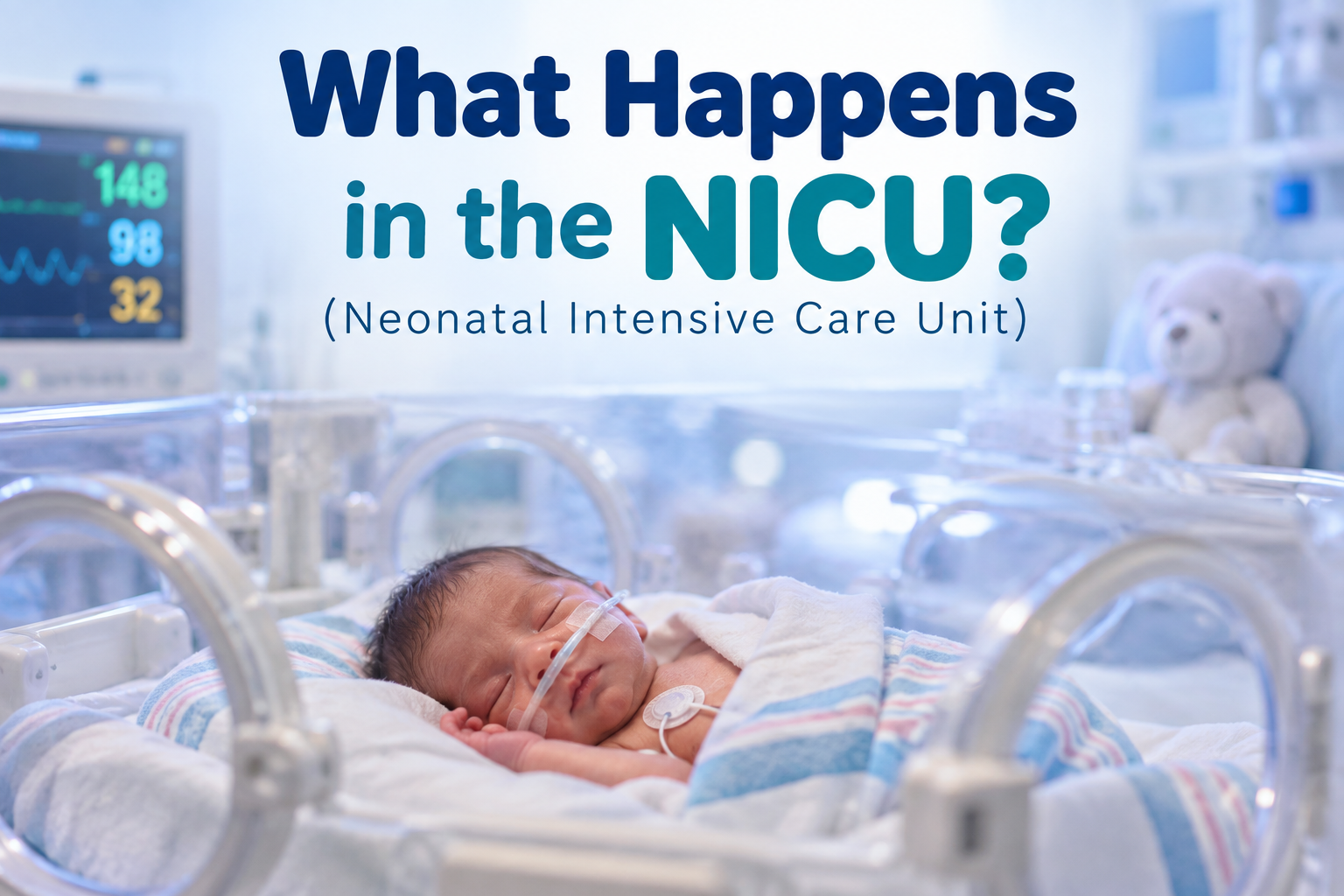
What Happens in the NICU? (Neonatal Intensive Care Unit)
Welcoming a newborn is one of the most special moments for any family. Most babies adapt to life outside the womb without major medical support, but some newborns require extra monitoring, specialized treatment, or intensive care immediately after birth. In such situations, the baby may be admitted to the Neonatal Intensive Care Unit (NICU).
For parents, hearing that their newborn needs NICU care can naturally bring many questions: Why does my baby need the NICU? What happens inside the NICU? Who will take care of my baby? How will my baby be fed? When can we take our baby home?
Understanding how a NICU works can help parents feel more informed and prepared during their baby’s treatment journey.
Parents looking for specialized newborn care can consult Dr. Sumit Chakravarty, Best Child Specialist in Faridabad and Best NICU Doctor in Faridabad, for evaluation and management of newborns, premature babies, and high-risk infants. Dr. Sumit Chakravarty is an experienced pediatrician and neonatologist and serves as Associate Director – Paediatrics & Neonatology and Head – NICU at Asian Institute of Medical Sciences, Faridabad.
What Is a NICU?
A Neonatal Intensive Care Unit, commonly known as a NICU, is a specialized hospital unit designed to care for newborn babies who need close medical monitoring or advanced treatment.
Unlike a regular newborn nursery, a NICU is equipped to manage babies who may have been born prematurely, have a low birth weight, experience breathing or feeding difficulties, develop infections, or require treatment for other medical conditions.
The NICU brings together specialized doctors, nurses, respiratory therapists and other healthcare professionals who work as a team to support newborns requiring additional medical care.
Some babies may need NICU care only for a short period, while premature or critically ill babies may require a longer stay. The duration depends on the baby’s gestational age, medical condition, feeding ability, breathing stability and overall progress.
Why Might a Baby Be Admitted to the NICU?
There are many reasons why a newborn may require NICU admission. Admission does not necessarily mean that every baby is critically ill. Some babies simply require additional observation or temporary medical support.
Common reasons include:
- Premature birth
- Low or very low birth weight
- Breathing difficulties
- Respiratory distress after birth
- Low oxygen levels
- Neonatal jaundice requiring treatment
- Suspected or confirmed infections
- Low blood sugar
- Difficulty maintaining body temperature
- Feeding difficulties
- Birth-related complications
- Congenital or medical conditions requiring monitoring
- Babies born after certain high-risk pregnancies
- Need for neonatal resuscitation or respiratory support
Premature babies are particularly likely to need additional medical support because organs such as the lungs, digestive system and nervous system may still be developing.
What Happens When a Baby First Enters the NICU?
When a newborn is admitted to the NICU, the neonatal team first evaluates the baby’s immediate medical needs.
The assessment may include checking the baby’s breathing, heart rate, oxygen saturation, body temperature, blood sugar, weight and general condition.
Depending on the baby’s health, doctors may also recommend blood investigations, imaging or other diagnostic tests.
The NICU team then develops an individualized treatment and monitoring plan. Not every baby receives the same treatment. Care depends entirely on why the baby has been admitted and how the baby responds.
Parents are generally informed about their baby’s condition, investigations and treatment plan so that they remain involved in the care process.
Continuous Monitoring Inside the NICU
One of the first things parents notice when entering a NICU is the number of monitors, tubes and machines around their baby. Although these can initially appear intimidating, many are simply there to continuously monitor important body functions.
Small sensors may be attached to the baby’s skin to monitor:
Heart rate: This helps the neonatal team continuously assess the baby’s heartbeat.
Breathing rate: Respiratory monitoring can identify changes in the baby’s breathing pattern.
Oxygen saturation: A pulse oximeter measures the amount of oxygen carried in the baby’s blood.
Body temperature: Premature and low-birth-weight babies may have difficulty regulating their body temperature, so temperature is monitored carefully.
Blood pressure: Some newborns may require regular or continuous blood-pressure monitoring.
Premature infants can sometimes experience temporary pauses in breathing known as apnea, which may occur along with changes in heart rate and oxygen saturation. NICU monitoring helps healthcare teams identify these events promptly.
Keeping the Baby Warm
Newborns, especially premature and low-birth-weight babies, may lose body heat more quickly than full-term babies.
To help maintain an appropriate temperature, a baby may be placed inside an incubator or under a radiant warmer.
An incubator provides a controlled environment where temperature and sometimes humidity can be carefully managed. This allows the baby to use energy for growth and recovery rather than maintaining body temperature.
As the baby becomes stronger and is able to regulate temperature independently, the neonatal team may gradually transition the baby from the incubator to an open cot.
Breathing Support in the NICU
Breathing problems are among the common reasons newborns, particularly premature babies, require intensive neonatal care.
A baby’s lungs may not be fully developed at birth, or the baby may experience respiratory difficulty because of infection, aspiration or another medical condition.
Depending on the severity of the problem, breathing support can range from supplemental oxygen to more advanced respiratory assistance.
Oxygen Therapy
Some babies only require additional oxygen delivered through small nasal tubes or another oxygen-delivery system.
CPAP
Continuous Positive Airway Pressure (CPAP) provides gentle pressure that helps keep the baby’s airways and lungs open while the baby continues breathing.
Mechanical Ventilation
Babies with significant breathing difficulties may require a ventilator to provide respiratory support.
The neonatal team continually monitors the baby’s condition and adjusts respiratory support according to clinical need. As breathing improves, support may gradually be reduced.
How Are Babies Fed in the NICU?
Nutrition plays an important role in newborn growth and recovery, particularly for premature babies.
Full-term babies are usually able to coordinate sucking, swallowing and breathing during feeding. Premature babies, however, may not yet have developed this coordination sufficiently to breastfeed or bottle-feed safely.
Depending on the baby’s condition and maturity, feeding may involve several approaches.
Breastfeeding
Whenever medically appropriate and feasible, mothers may be encouraged and supported to breastfeed.
Expressed Breast Milk
If the baby cannot breastfeed directly, the mother may express breast milk. This can then be given through an appropriate feeding method.
Feeding Tube
Some premature babies receive milk through a thin feeding tube that passes through the nose or mouth into the stomach.
As the baby’s sucking and swallowing coordination develops, the healthcare team can gradually work toward oral feeding.
Some babies may also need additional nutritional support based on their individual medical needs.
Treatment of Neonatal Jaundice
Jaundice is common in newborn babies and causes yellowing of the skin and eyes due to increased bilirubin levels.
Many cases are mild, but some newborns require treatment and monitoring.
When bilirubin levels reach a level where treatment is indicated, phototherapy may be used. During phototherapy, the baby’s skin is exposed to a special type of therapeutic light that helps the body process bilirubin more effectively.
Bilirubin levels are monitored during treatment, and phototherapy is adjusted or stopped according to the baby’s response and clinical guidance.
Preventing and Treating Infections
Newborns, particularly premature infants, can be more vulnerable to infection because their immune systems are still developing.
For this reason, NICUs follow strict infection-control practices.
Parents and visitors are usually asked to clean their hands thoroughly before touching the baby. NICU staff also follow established hand-hygiene and infection-control protocols.
If an infection is suspected, doctors may recommend blood tests or other investigations. Antibiotics or other treatments may be started when clinically appropriate.
Kangaroo Mother Care and Parent Involvement
NICU care is not limited to machines and medicines. Parents have an important role in their baby’s care whenever the baby’s medical condition allows.
One valuable approach is Kangaroo Mother Care (KMC), which involves skin-to-skin contact between the baby and a parent.
Depending on the baby’s stability and medical advice, skin-to-skin care can support bonding, breastfeeding and the baby’s comfort.
Parents may also gradually participate in activities such as feeding, diaper changes and comforting their baby under the guidance of the NICU team.
Family-centered neonatal care recognizes that parents are an important part of the baby’s care journey.
Who Takes Care of a Baby in the NICU?
NICU care involves a multidisciplinary healthcare team.
The team may include:
Neonatologist: A pediatric doctor with specialized training in caring for newborns, particularly premature and critically ill babies.
Pediatrician: A doctor trained in the medical care of infants, children and adolescents.
NICU Nurses: Specially trained nurses who continuously monitor and care for newborn babies.
Respiratory Therapists: Healthcare professionals who help manage breathing-support equipment and respiratory monitoring.
Depending on the baby’s needs, other specialists such as pediatric surgeons, cardiologists, neurologists, ophthalmologists, dietitians, lactation specialists or developmental professionals may also be involved.
How Long Does a Baby Stay in the NICU?
There is no fixed duration for a NICU stay.
Some babies may require observation for only a few days, while very premature or medically complex babies may remain in the NICU for several weeks or longer.
Before discharge, the neonatal team generally looks for important signs of stability, such as:
- Stable breathing without significant medical support
- Ability to maintain an appropriate body temperature
- Adequate feeding
- Consistent weight gain
- Stable vital signs
- Medical conditions being sufficiently controlled for home care
Discharge decisions are individualized and based on the baby’s overall clinical condition rather than simply age or weight.
What Happens Before NICU Discharge?
Going home after a NICU stay is an exciting milestone, but it can also make parents anxious.
Before discharge, parents are usually educated about caring for their baby at home.
Guidance may cover feeding, medicines if prescribed, safe sleep practices, hygiene, warning signs, follow-up appointments and vaccination.
Parents of premature or high-risk babies may also be advised to attend regular follow-up appointments so that growth and development can be monitored.
Follow-Up Care After the NICU
Leaving the NICU does not always mean that medical follow-up is complete.
Babies who were born prematurely, had a very low birth weight or experienced significant medical problems may benefit from specialized follow-up.
During these visits, doctors may monitor:
- Weight and physical growth
- Feeding and nutrition
- Vision and hearing where indicated
- Motor development
- Speech and communication milestones
- Vaccination
- Neurological development
- General health
Regular follow-up allows doctors to identify potential developmental or health concerns at an early stage and recommend appropriate intervention when necessary.
Dr. Sumit Chakravarty – Best Child Specialist in Faridabad
When a newborn requires specialized care, choosing an experienced pediatrician and neonatologist becomes particularly important.
For parents searching for the Best Child Specialist in Faridabad, Dr. Sumit Chakravarty provides comprehensive pediatric and neonatal care with extensive experience in managing newborns, premature infants and high-risk babies.
Dr. Sumit Chakravarty is currently Associate Director – Paediatrics & Neonatology and Head – Neonatal Intensive Care Unit (NICU) at Asian Institute of Medical Sciences, Faridabad.
His professional training includes specialized experience in neonatology and neonatal intensive care, including neonatal training in Australia.
His areas of clinical expertise include neonatal intensive care, premature and high-risk newborn management, neonatal resuscitation, respiratory support, neonatal ventilation, newborn feeding and nutrition, and pediatric care.
Looking for the Best NICU Doctor in Faridabad?
NICU care requires specialized expertise because newborn babies have very different medical requirements from older children and adults.
Parents looking for the Best NICU Doctor in Faridabad can consult Dr. Sumit Chakravarty for specialized neonatal care. His work as Head of NICU and his experience in advanced neonatal intensive care allow him to manage a wide range of newborn conditions, from premature birth and respiratory problems to feeding difficulties and high-risk neonatal conditions.
Along with acute NICU management, follow-up is particularly important for premature and high-risk babies. Continued monitoring helps track feeding, growth, development and overall health after discharge.
When Should Parents Consult a Neonatologist?
A neonatologist may be involved before or after delivery when a baby is expected to need specialized newborn care.
Parents may be advised to seek neonatal evaluation when:
- A baby is born prematurely
- Birth weight is lower than expected
- The newborn has difficulty breathing
- The baby is not feeding properly
- There is excessive or rapidly increasing jaundice
- The baby appears unusually sleepy or difficult to wake
- Body temperature is abnormal
- There are signs of infection
- The baby experiences seizures or abnormal movements
- A congenital condition is suspected
- A high-risk pregnancy may affect the newborn
- A baby needs follow-up after NICU discharge
Any newborn who develops breathing difficulty, blue or grey discoloration, seizures, severe lethargy or another concerning acute symptom requires prompt medical assessment.
Frequently Asked Questions About NICU Care
1. What does NICU stand for?
NICU stands for Neonatal Intensive Care Unit. It is a specialized hospital unit for newborn babies who need additional monitoring, treatment or intensive medical care.
2. Does NICU admission mean my baby is critically ill?
Not always. Some newborns require NICU admission mainly for monitoring, feeding support, jaundice treatment, temperature regulation or short-term breathing assistance.
3. Why are premature babies admitted to the NICU?
Premature babies may have immature lungs, difficulty maintaining body temperature, feeding problems or other medical needs that require specialized monitoring and treatment.
4. Can parents visit their baby in the NICU?
Parent access depends on the hospital’s NICU policy and the baby’s medical condition. Many neonatal units encourage appropriate parental involvement and family-centered care.
5. Can a mother breastfeed a baby admitted to the NICU?
In many cases, yes. When direct breastfeeding is not yet possible, expressed breast milk may be provided through another feeding method based on the baby’s condition.
6. What machines are used in a NICU?
Depending on a baby’s condition, equipment may include incubators, radiant warmers, cardiorespiratory monitors, pulse oximeters, CPAP machines, ventilators, infusion pumps and phototherapy units.
7. How long does a premature baby stay in the NICU?
The length of stay varies significantly. It depends on gestational age at birth, weight, breathing, feeding ability, medical complications and overall progress.
8. What is the role of a neonatologist in the NICU?
A neonatologist specializes in the medical care of newborn babies, particularly premature, high-risk or critically ill infants. The neonatologist evaluates the baby’s condition and coordinates intensive neonatal treatment.
9. Does a baby need follow-up after NICU discharge?
Many premature and high-risk babies require follow-up after discharge to monitor growth, feeding, development, vaccination and any ongoing medical concerns.
10. Who is the Best NICU Doctor in Faridabad?
Parents looking for specialized neonatal and pediatric care in Faridabad can consult Dr. Sumit Chakravarty, Associate Director – Paediatrics & Neonatology and Head – NICU at Asian Institute of Medical Sciences, Faridabad. His experience includes neonatal intensive care and management of premature and high-risk newborns.
Conclusion
A NICU provides specialized medical care to newborns who need more support than can be provided in a regular newborn nursery. From continuous monitoring and temperature control to respiratory assistance, feeding support, infection management and developmental care, every aspect of NICU treatment is designed around the individual needs of the newborn.
For parents, understanding what happens inside the NICU can make an unfamiliar environment easier to navigate. Asking questions, participating in your baby’s care whenever medically appropriate, and maintaining regular communication with the neonatal team can help you stay informed throughout the journey.
If you are searching for the Best Child Specialist in Faridabad or Best NICU Doctor in Faridabad, you can consult Dr. Sumit Chakravarty for specialized pediatric, neonatal and NICU care.
Dr. Sumit Chakravarty
Associate Director – Paediatrics & Neonatology
Head – Neonatal Intensive Care Unit (NICU)
Asian Institute of Medical Sciences, Faridabad
Asian Hospital: Badkal Flyover Road, Sector 21A, Faridabad, Haryana – 121001
Asha Child Care: C-13, Arya Samaj Road, Nehru Ground, NIT Faridabad, Haryana – 121001
Appointment: +91 9873510270
