Mobile Addiction in Children
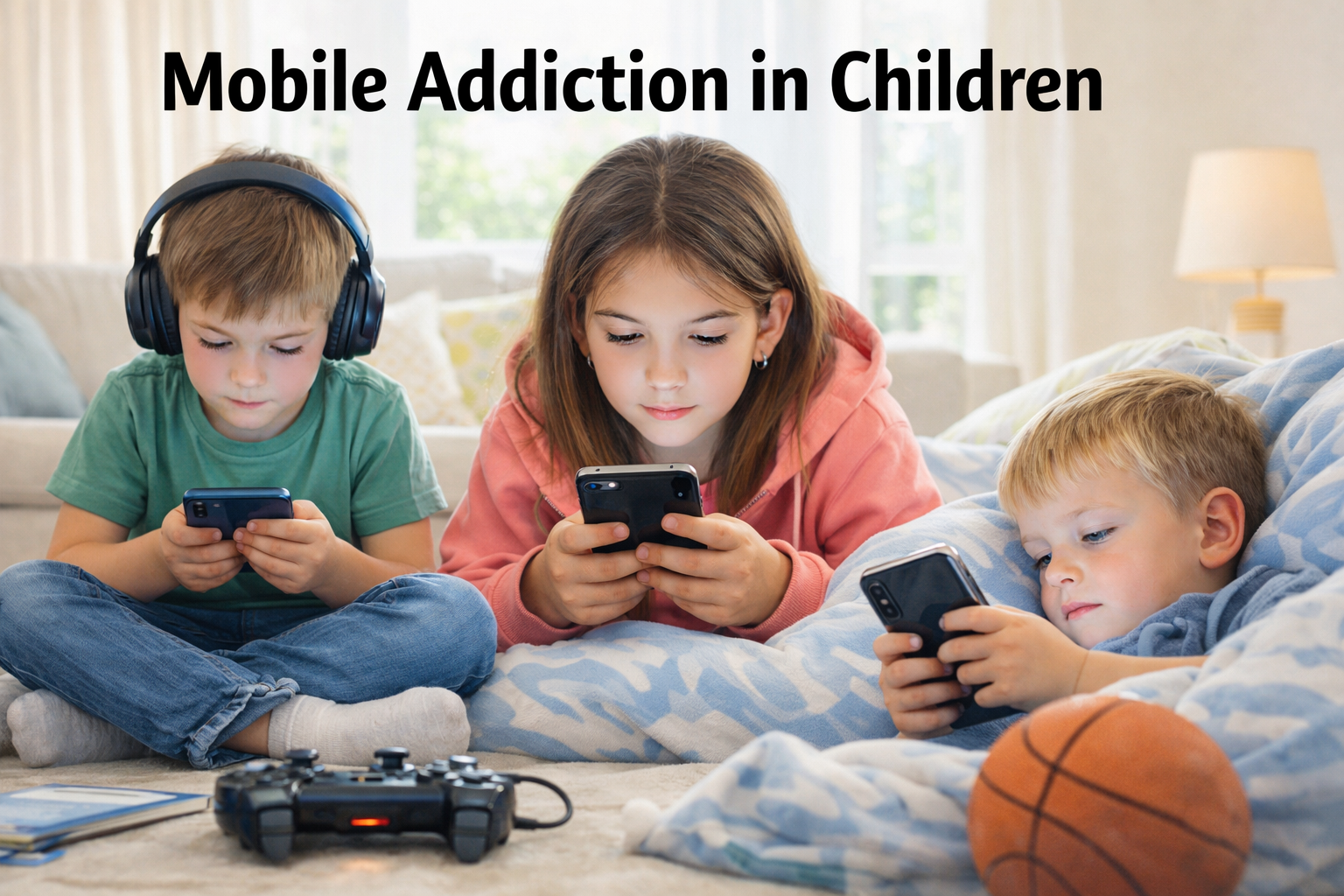
Mobile Addiction in Children
Introduction
In today’s digital era, mobile phones have become an inseparable part of daily life—not just for adults but increasingly for children as well. While smartphones offer educational benefits and entertainment, excessive use has led to a growing concern: mobile addiction in children.
From toddlers watching videos to teenagers scrolling endlessly on social media, screen exposure is rising at an alarming rate. What may begin as harmless entertainment often turns into a daily habit, gradually affecting a child’s physical activity, sleep patterns, and emotional well-being. Many parents initially overlook this change until it starts impacting their child’s behavior, studies, or social interactions. According to experts, including leading child specialist like Dr. Sumit Chakravarty, excessive screen exposure during early developmental years can have long-term effects on a child’s mental and physical health if not managed properly. Studies suggest that over 80% of children exceed recommended screen time limits, and many show signs of addictive behavior.
This blog explores the effects, warning signs, causes, and solutions for mobile addiction in children, along with expert guidance for parents.
Understanding Mobile Addiction in Children
Mobile addiction refers to compulsive and excessive use of smartphones, where children feel unable to function normally without their devices.
Key Statistics in India
- Around 42% of children aged 5–12 show signs of mobile addiction
- Nearly 64% of children feel addicted to smartphones
- Many children spend 2–3+ hours daily on screens, exceeding safe limits
This clearly shows that mobile addiction is not just a habit—it’s becoming a serious public health concern.
Causes of Mobile Addiction in Children
Understanding the root causes helps in effective prevention.
1. Easy Access to Smartphones
With increasing smartphone penetration, children are exposed to screens at a very early age.
2. Lack of Parental Monitoring
Busy lifestyles often lead parents to use mobiles as a “digital babysitter.”
3. Engaging Apps & Games
Modern apps are designed to keep users hooked through rewards, notifications, and autoplay features.
4. Social Pressure
Children feel the need to stay connected with peers through games and social media.
5. Emotional Escape
Children may use mobiles to cope with boredom, stress, or loneliness.
Effects of Mobile Addiction in Children
Mobile addiction affects children physically, mentally, socially, and academically.
1. Physical Health Problems
- Eye strain and vision issues
- Poor posture (neck and spine problems)
- Reduced physical activity leading to obesity
2. Sleep Disturbances
Children using mobile phones before bedtime often experience:
- Poor sleep quality
- Insomnia
- Daytime fatigue
3. Mental Health Issues
- Anxiety and depression
- Irritability and mood swings
- Reduced emotional stability
4. Poor Academic Performance
- Reduced concentration
- Decreased memory retention
- Lower academic outcomes
5. Social & Behavioral Issues
- Reduced face-to-face interaction
- Poor communication skills
- Increased aggression or withdrawal
6. Impact on Brain Development
Early and excessive screen exposure may affect:
- Cognitive development
- Attention span
- Language skills
Warning Signs of Mobile Addiction
Parents should watch out for these red flags:
- Child becomes irritated when phone is taken away
- Loss of interest in outdoor activities
- Excessive screen time (3–6+ hours daily)
- Decline in academic performance
- Sleep problems
- Constant urge to check phone
Recommended Screen Time for Children
According to pediatric guidelines:
- Below 2 years: No screen time
- 2–5 years: Less than 1 hour/day
- 6–12 years: Limited and supervised use
Solutions to Control Mobile Addiction in Children
Managing mobile addiction requires a balanced, practical approach.
1. Set Clear Screen Time Rules
- Fix daily screen limits
- No screens during meals
- No mobile use before bedtime
2. Encourage Outdoor Activities
Promote:
- Sports
- Cycling
- Playing with friends
3. Be a Role Model
Children imitate parents. Limit your own screen time.
4. Create Screen-Free Zones
- Bedrooms
- Dining areas
- Study rooms
5. Engage in Family Time
- Board games
- Storytelling
- Family outings
6. Monitor Content
Ensure children consume:
- Age-appropriate content
- Educational apps
- Limited gaming
7. Introduce Digital Detox Days
Designate one day per week with minimal or no screen usage.
8. Seek Professional Help
If addiction becomes severe, consult a pediatrician or child specialist.
Role of Pediatricians in Managing Mobile Addiction
Pediatricians play a crucial role in:
- Identifying early signs of addiction
- Guiding parents on screen habits
- Addressing behavioral and developmental concerns
Best Pediatrician in Faridabad for Child Health Guidance
When it comes to expert child healthcare and behavioral guidance, Dr. Sumit Chakravarty is regarded as one of the best pediatricians in Faridabad.
Why Choose Dr. Sumit Chakravarty:
- Extensive experience in pediatric care
- Expertise in child development & behavioral issues
- Focus on holistic child health
- Personalized guidance for modern challenges like screen addiction
Long-Term Impact if Not Addressed
Ignoring mobile addiction can lead to:
- Chronic mental health disorders
- Academic decline
- Poor social development
- Long-term behavioral issues
Practical Parenting Tips
- Communicate openly with your child
- Avoid punishment—focus on understanding
- Use parental control tools
- Reward offline activities
- Maintain a structured daily routine
Conclusion
Mobile addiction in children is a growing concern in today’s digital world. While technology is an essential part of life, balance is the key.
Parents must take proactive steps to:
- Monitor screen usage
- Encourage healthy habits
- Seek expert advice when needed
With the right approach and guidance from experienced pediatricians like Dr. Sumit Chakravarty, children can enjoy technology responsibly while maintaining their physical, mental, and emotional well-being.